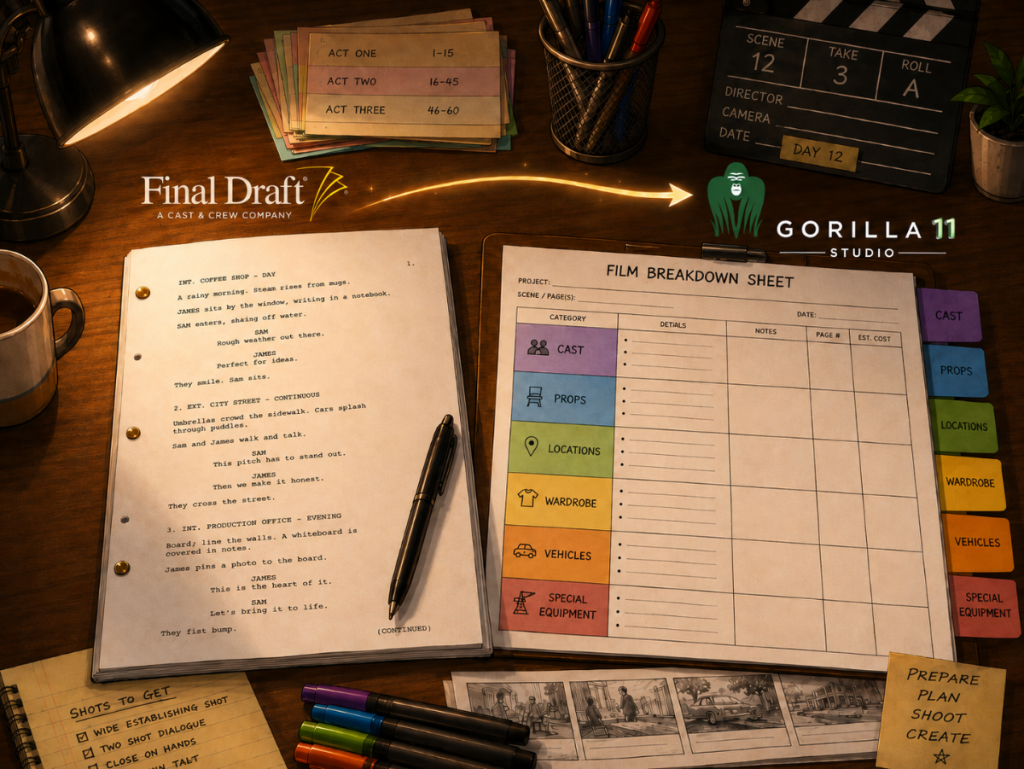
A screenplay is not just a story document. Once pre-production begins, it becomes a working map for departments, cast, locations, props, wardrobe, transportation, budgeting, and the shooting schedule. That map usually begins in Final Draft, but the real production work begins when the script is imported, broken down, tagged, scheduled, and translated into usable reports. […]
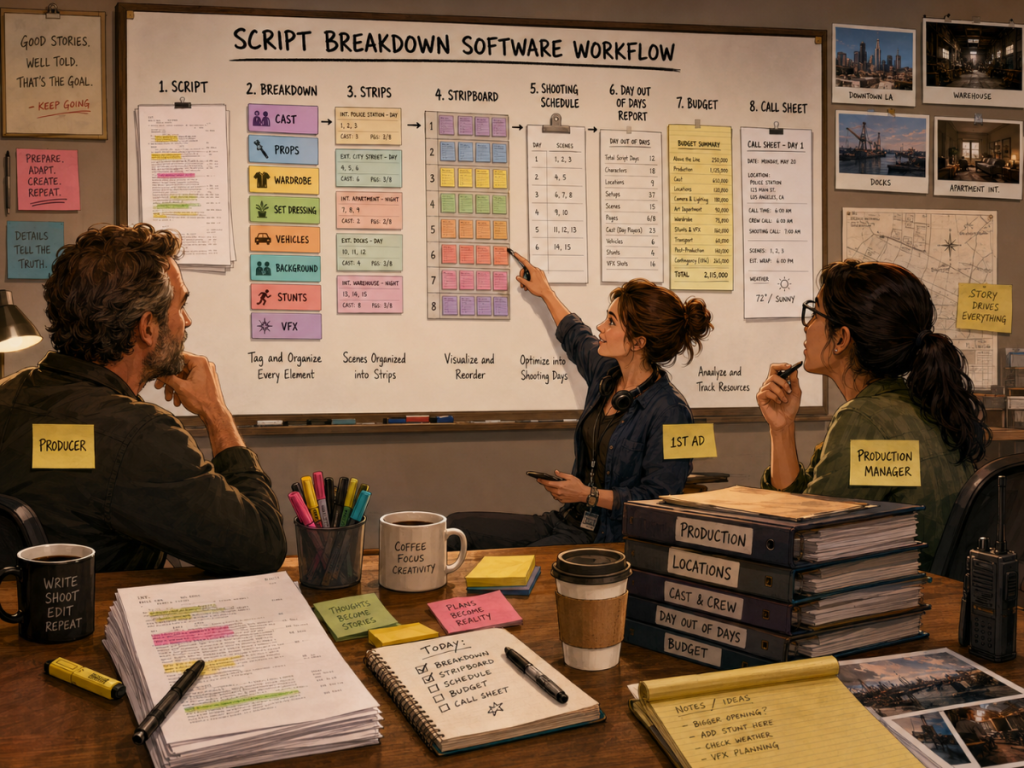
A script breakdown is where a screenplay starts becoming a production plan. Before scenes can be scheduled, budgeted, grouped by location, assigned to shoot days, or turned into call sheets, someone has to identify what each scene actually requires. That means cast, props, wardrobe, vehicles, set dressing, background actors, stunts, animals, special effects, visual effects, […]
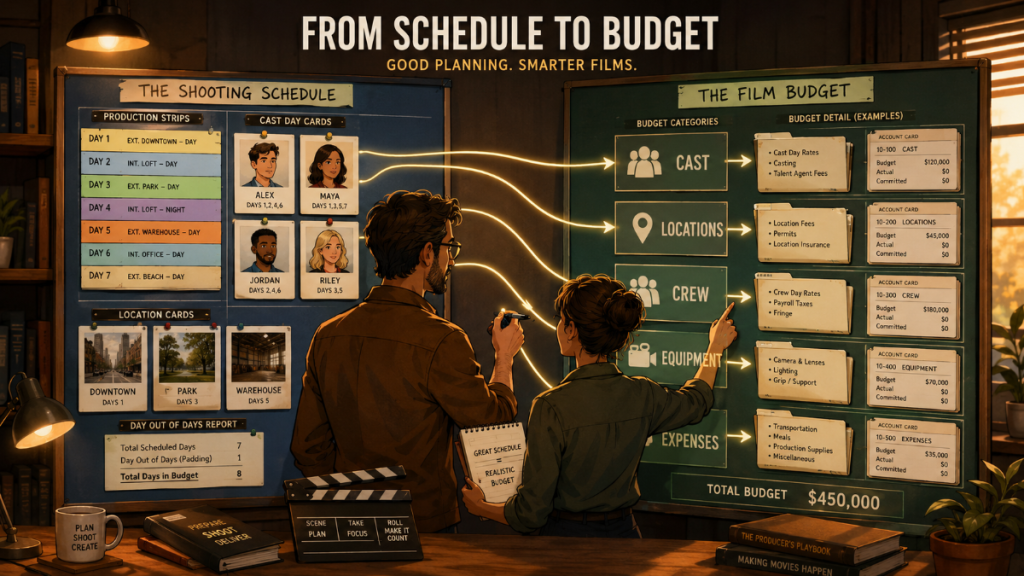
A shooting schedule is not just a plan for what gets filmed when. It is one of the strongest budgeting tools a producer has. Every strip on the board carries financial information. A cast-heavy day affects talent costs. A remote location affects transportation. A night shoot affects crew hours. A company move affects time, trucks, […]
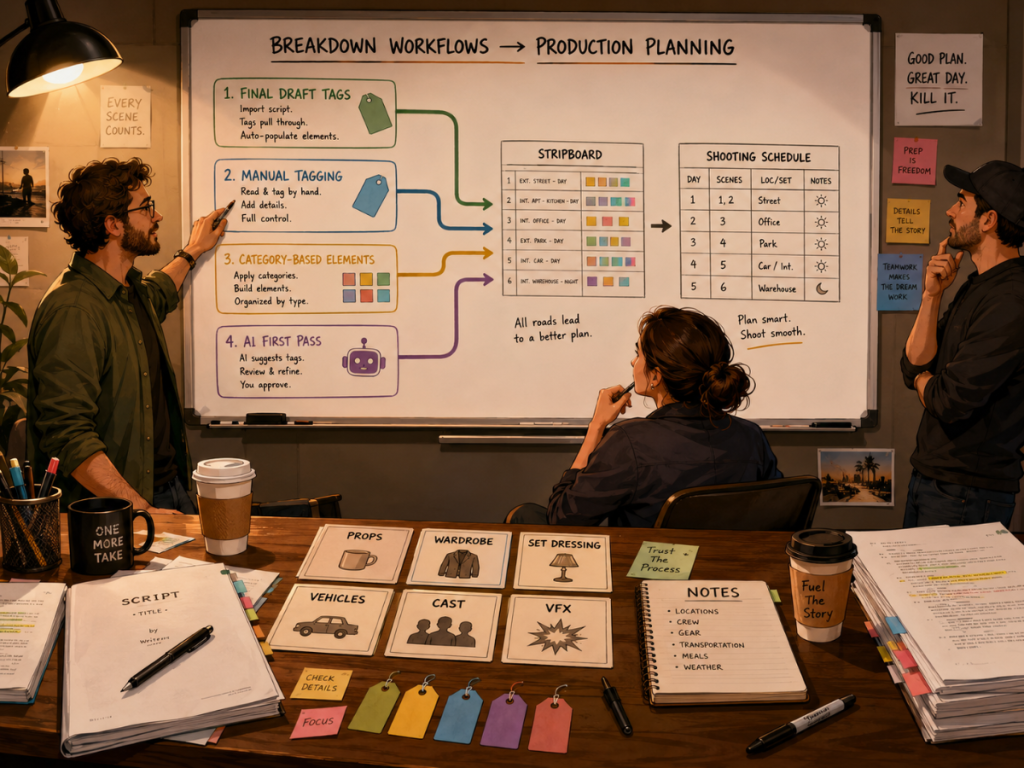
Breaking down a screenplay is one of the first moments when a film becomes a production. Before the stripboard, before the shooting schedule, before the Day Out of Days report, before the budget can truly reflect the plan, someone has to look at the script and ask: What does this scene actually require? That means […]
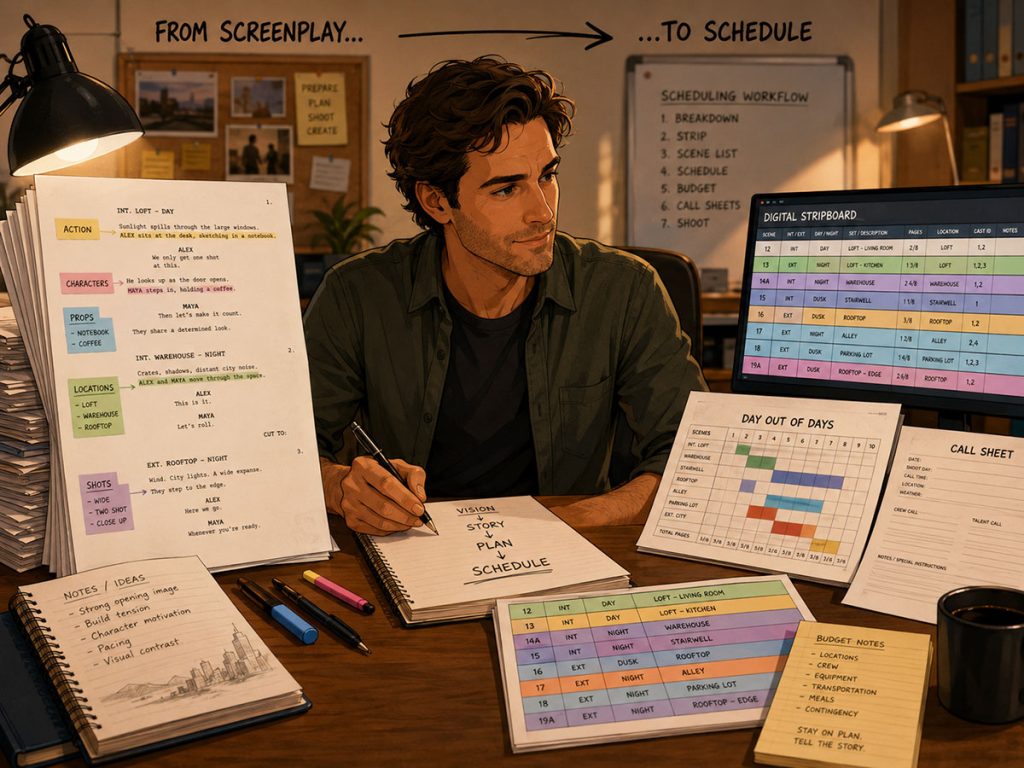
A screenplay is written to be read. A shooting schedule is built so the movie can actually be made. Between those two documents is one of the most important transitions in pre-production: turning script pages into shoot days, cast requirements, locations, production strips, breakdown elements, Day Out of Days reports, call sheets, and budget decisions. […]
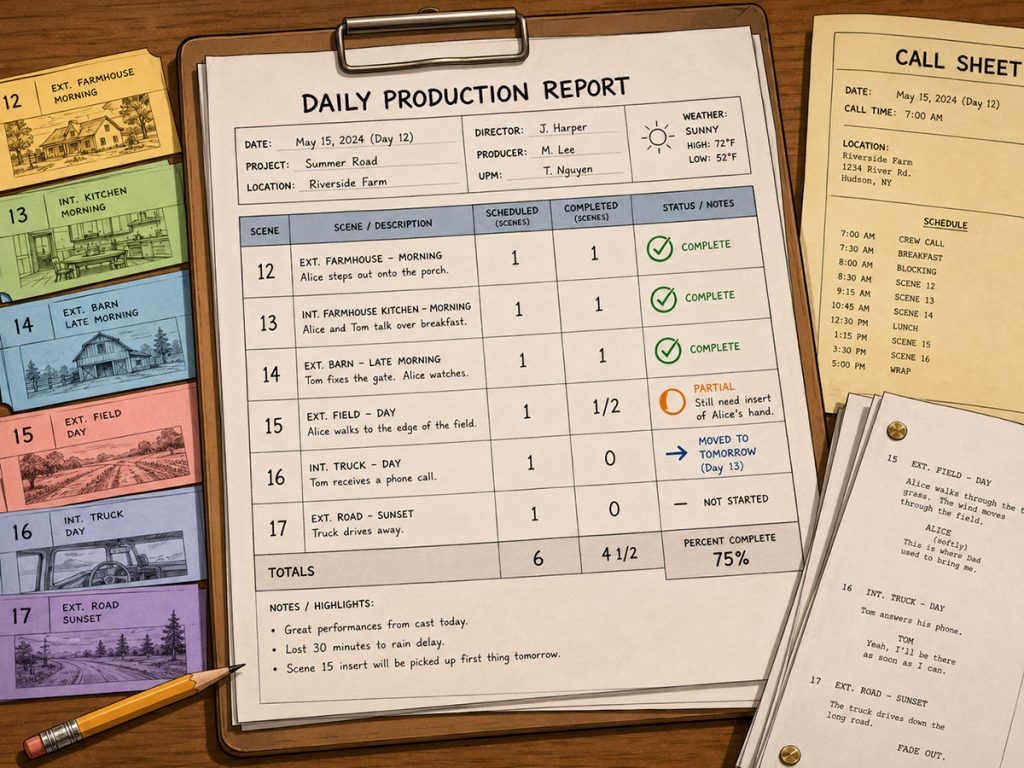
A call sheet tells the crew what is supposed to happen today. A shooting schedule tells the production what is supposed to happen across the entire shoot. A Daily Production Report tells everyone what actually happened. Film production is full of plans. The stripboard is a plan. The shooting schedule is a plan. The one-liner […]

A film location is never just a place. On the page, it may look simple: INT. APARTMENT – NIGHTEXT. DINER – DAYINT. WAREHOUSE – DAWN But once that scene becomes part of a shooting schedule, the location starts collecting questions like a production office collects coffee cups. Can the crew park there?Is there enough power?Can […]
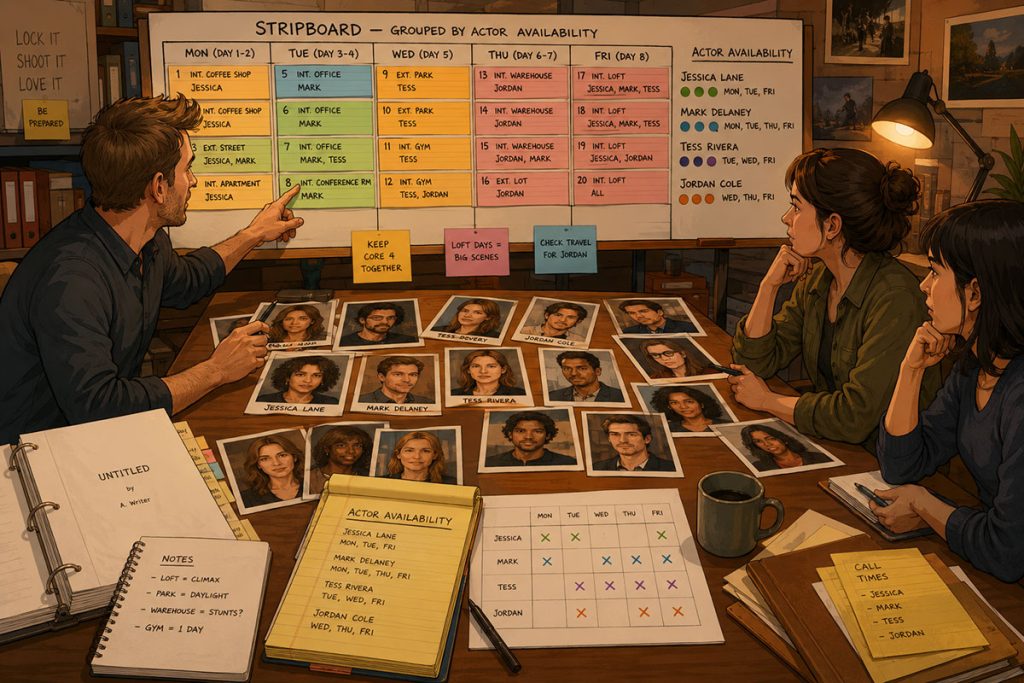
Scheduling actors is one of the most important parts of building a film schedule. Locations matter. Page count matters. Equipment matters. But actors are often the heartbeat of the shooting schedule. If the right actor is not available on the right day, the scene cannot happen. If cast days are scattered inefficiently, the budget can […]
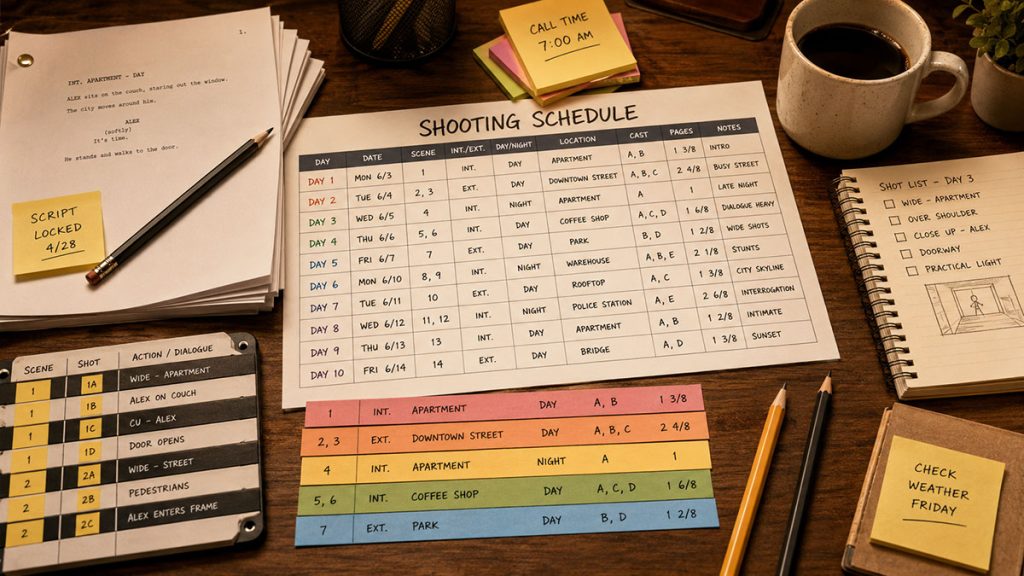
A shooting schedule can look like a strange production spellbook the first time you see one. Scene numbers. Shoot days. Locations. Cast IDs. Page counts. Day and night labels. Interior and exterior codes. Company moves. Notes. Meal breaks. Production banners. Colored strips. Tiny abbreviations that seem to know more about the movie than you do. […]