
Guide to the Preproduction Process
From the first idea to the first day on set: 12 practical stages of film pre-production, with modern online tools for screenwriting, scheduling, budgeting, and shot planning.
You've Made the Decision. You're Making a Film.
That's a big leap. Making a film can be thrilling, expensive, exhausting, and occasionally chaotic, sometimes all before lunch. But the decisions you make during pre-production will determine how smoothly the actual shoot goes.
This guide is for the writer, director, producer, or the ambitious person wearing all three hats. We'll walk through the process up to principal photography, explain the terminology, and look at where preparation can prevent the avoidable disasters that every filmmaker dreads.
If you're wearing all three hats, I have one piece of advice: leave a little money in the budget for a vacation when the film is finished. You may need it.
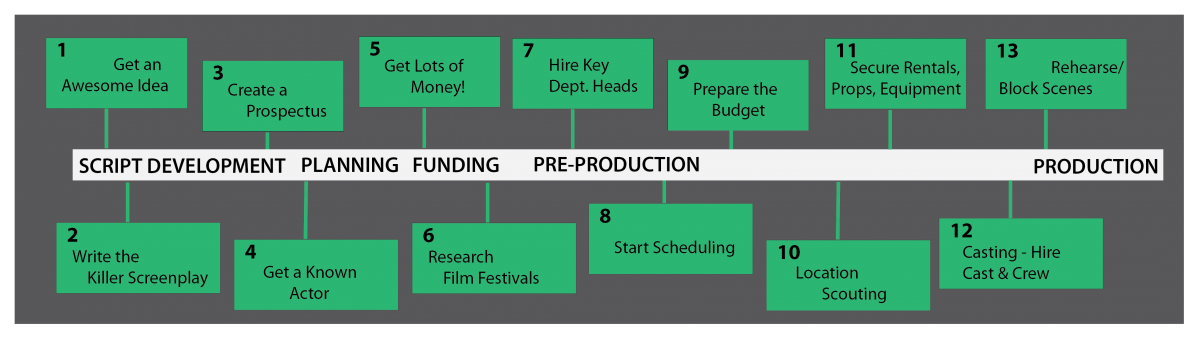
01Develop the Idea
Let's assume you have a good idea. It doesn't have to be something nobody has ever thought of before. Originality is often found in the characters, point of view, execution, and emotional experience, not only in the premise.
Ask what your audience should feel, why this story needs to be told, and whether the project is realistically achievable at the scale you're imagining. A compelling short filmed well can have more impact than a feature stretched beyond its resources.
Before you move forward, define the story, intended audience, format, approximate scope, and the one reason someone should want to watch it.
02Write the Screenplay
A strong screenplay is the foundation of everything that follows. You'll be asking people to contribute time, creativity, money, and faith in the project. Give them a script worth investing in.
Whether you're writing it yourself or collaborating with a screenwriter, focus on structure, characters, conflict, dialogue, and rewrites. Table reads and thoughtful feedback can reveal problems that are difficult to see while staring at your own pages.
Classic books such as Screenplay by Syd Field and Adventures in the Screen Trade by William Goldman can offer perspective, but no screenwriting book replaces writing, rewriting, and getting constructive feedback.
For a browser-based writing workflow, explore Page One screenwriting software, which offers screenplay formatting and production-oriented tools. Keep a clean, organized version of the script as it approaches production.
03Create a Prospectus or Pitch Package
A film prospectus is essentially the project's business case. It helps explain what you're making, who it's for, why it matters, and how you plan to finance, produce, and distribute it.
It may include a synopsis or treatment, key creative personnel, intended audience, comparable projects, preliminary budget range, production strategy, distribution possibilities, and supporting visuals. A strong lookbook or concept image can communicate tone before anyone has read the complete script.
Be enthusiastic, but don't promise investors a guaranteed return. Present assumptions, risks, and estimates clearly. Depending on how funds are raised, securities rules and legal requirements may apply, so obtain professional advice before soliciting investment.
Practical advice: An early budget range is not a locked production budget. It is a planning tool. Revise it as the screenplay, schedule, locations, cast, and financing develop.
04Explore Casting and Attachments
Casting can affect financing, distribution opportunities, scheduling, and, of course, the film itself. An experienced or recognizable actor may strengthen a package, but a name actor is not a universal requirement for a successful independent film.
Identify the roles that carry the story, work with a casting director when the budget permits, and consider what each performer brings to the character. If approaching representatives for potential attachments, be ready with a credible script, creative team, proposed dates, and a realistic offer.
You'll also need to account for auditions, availability, negotiations, travel, accommodations, and any applicable union agreements. Casting decisions made early can change the entire production plan.
05Secure Financing
Financing is often the part that determines whether your film moves from a great idea to an actual production. Potential sources include private investment, production partners, grants, crowdfunding, presales, and your own resources. Each carries different costs, risks, obligations, and degrees of control.
The old filmmaking joke is, "Don't use your own money." The useful lesson underneath it is this: don't put yourself or anyone else at financial risk without understanding the consequences. Make a plan that includes contingencies and realistic cash flow, not only a headline budget number.
Funding strategy, schedule, and budget are intertwined. A location change may increase costs. A shorter shoot may require more equipment or a larger crew. The more thoughtfully you test these tradeoffs now, the fewer unpleasant surprises you'll face during production.
06Research Festivals and Distribution Before You Shoot
Yes, before you shoot. Festivals, broadcasters, platforms, and distributors can have different preferences and technical requirements. You don't want to discover after editing that you failed to secure important music, location, artwork, or performance rights.
Research festivals that fit the film's genre, running time, and audience. Review eligibility requirements, premiere rules, submission fees, and deadlines. Plan for possible deliverables such as captions, publicity images, a trailer, a festival screener, and clearances.
Networking and professional relationships can be valuable, but they don't replace a strong film or a legitimate submission process. Build a realistic festival and distribution strategy, not a strategy based on assumed acceptance.
07Hire Key Department Heads
As financing and the production scope take shape, bring in the people who will turn your creative plan into a workable shoot. Depending on the project, early hires may include a line producer, unit production manager, first assistant director, director of photography, production designer, location manager, and sound mixer.
Share the screenplay and preliminary production goals so department heads can identify requirements and risks. Ask them to flag costly scenes, specialty equipment, difficult locations, safety concerns, and staffing needs before you lock the schedule.
Put agreements in writing. A crew deal memo can help document responsibilities, rates, dates, and other agreed terms. Use a version suited to your production and applicable law, and have qualified professionals review employment terms when necessary.
At this point, pre-production stops being a straight line and starts becoming a web of connected decisions. That's normal. The key is keeping information consistent as it changes.
08Break Down the Screenplay and Build the Film Schedule
Here's where pre-production becomes a detailed operational plan. A screenplay tells us what happens in a scene. A script breakdown identifies what the production needs to make that scene happen: cast, background performers, props, wardrobe, vehicles, special effects, sets, and other elements.
Once the scenes have been broken down, the assistant director or scheduling team organizes them into a stripboard and shooting schedule. Scenes may be grouped by location, cast availability, day or night requirements, set changes, and other practical constraints. The order you shoot is rarely the order in which the story unfolds.
Gorilla Scheduling Online brings that workflow into the browser. You can import a screenplay, break down scenes, build and rearrange a stripboard, organize shoot days, manage cast, crew, and locations, and generate production reports. Supported collaboration features depend on your plan.
If you want to explore the process in more detail, start with our guide to breaking down your script and our article on what online film scheduling makes possible.
Scheduling tip: The screenplay's set is where the scene takes place in the story. The filming location is where you'll actually shoot it. Those are not always the same place, and confusing them can create costly scheduling mistakes.
09Prepare and Refine the Production Budget
The schedule and budget should develop together. Your shoot-day count affects crew wages, equipment rentals, accommodations, catering, transport, and location costs. A scene with a complicated effect may demand more time and money than its page count suggests.
Work with an experienced line producer or production accountant whenever possible. Build accounts for above-the-line and below-the-line costs, consider fringes and payroll burdens, plan contingency, and review assumptions department by department.
Gorilla Budgeting Online provides a browser-based professional budgeting structure with accounts, categories, globals, fringes, Ratebook integration, and reporting. As your creative and logistical choices evolve, revisit the budget rather than treating it as a one-time document.
For a practical next step, read How to Turn a Script Breakdown Into a Film Budget. Also see why scheduling and budgeting decisions need to stay aligned.
10Scout, Evaluate, and Secure Locations
Location scouting is more than finding a place that looks right. A beautiful setting can become a terrible production location if you can't park trucks, control sound, access power, shelter the crew, or obtain the required permissions.
Your location manager and director should evaluate creative suitability. The director of photography and key crew should assess light, camera positions, equipment access, safety, and practical limitations. Verify availability, permits, insurance requirements, neighbors, restrooms, holding areas, weather exposure, and the cost of restoring the site afterward.
Track filming locations and their related scenes in Gorilla Scheduling Online so location decisions can inform the stripboard and production schedule.
11Secure Rentals, Props, Equipment, and Logistics
By now department heads should have a much clearer picture of what they need. Confirm camera and lighting rentals, sound equipment, props, wardrobe, practical effects, vehicles, sets, transportation, catering, communications, and any specialty services.
Ask each department to distinguish essential requirements from upgrades. Confirm suppliers, delivery and pickup times, insurance, cancellation policies, deposits, backups, and who is responsible for returns. Equipment that arrives a day late is no bargain, regardless of its rental rate.
Use the script breakdown and shooting schedule to determine when elements are needed, rather than renting everything for the entire shoot without checking the calendar.
12Rehearse, Block Scenes, and Plan the Shots
Rehearsal is where written scenes begin to become performances. Give the actors and director time to explore intention, movement, and pacing. The available rehearsal period will depend on the production, but don't underestimate the value of even a focused read-through or blocking session.
Once blocking is clearer, the director and cinematographer can plan coverage. Think in terms of scenes, camera setups, and individual shots. One scene may need several setups, and moving the camera or relighting the set takes time that should be considered when evaluating the shooting day.
Shot Monkey is Jungle Software's dedicated online tool for storyboards, camera setups, and shot lists. It can help turn the creative vision into an organized visual plan, separate from the scene breakdown and production scheduling work handled by Gorilla Scheduling Online.
For more detailed guidance, read how Shot Monkey helps plan camera setups and storyboards.
You're Ready to Shoot. Almost.
Before the first camera rolls, review the schedule with department heads, confirm permits and insurance, circulate emergency and safety procedures, and make sure the latest information reaches everyone who needs it.
Your assistant director's call sheet communicates the next day's practical plan: crew and cast calls, scenes, locations, weather information, contacts, and other essentials. If you're still learning the format, see What Is a Call Sheet in Film? Free Template and Complete Guide.
A good plan won't eliminate every surprise. It will give your team the time, information, and flexibility to handle them. Now go make your film.