
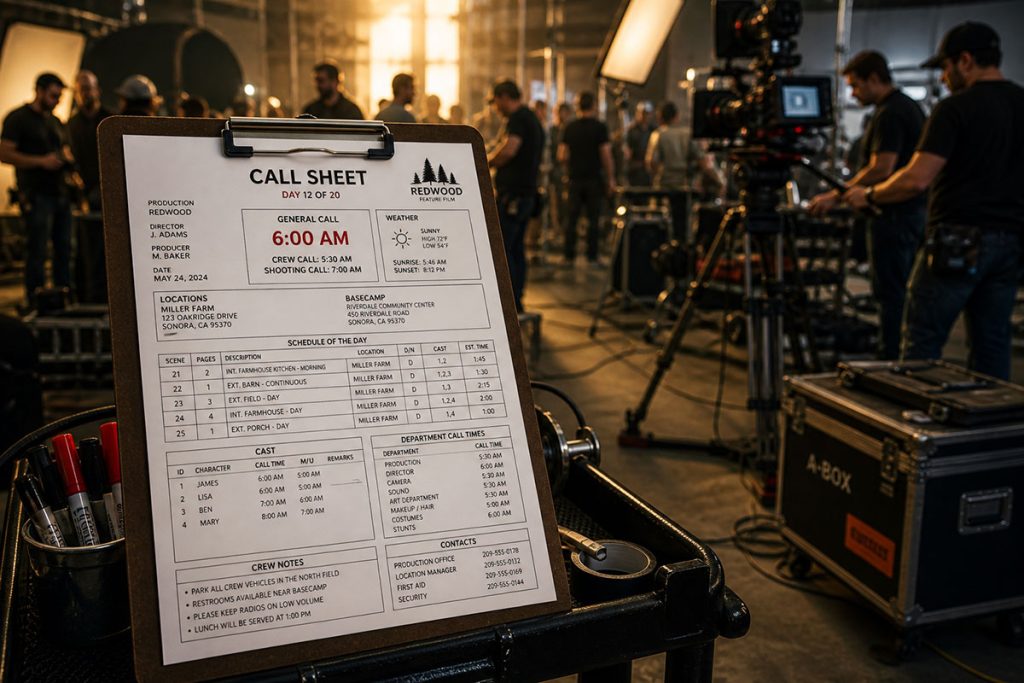
If you’ve ever been on a film set, you know that organization is everything. One of the most critical tools that keeps a production running smoothly is the call sheet.
A call sheet is the daily blueprint for your shoot. It tells every member of the cast and crew where they need to be, when they need to be there, and what needs to happen that day.
Without it, even the most carefully planned production can quickly fall into confusion.
In this guide, we’ll break down what a call sheet is, what goes into it, how it’s used in real productions, and how you can create one effectively.
🎯 Download Free Call Sheet Template (Excel)
To get started, you can download a free Excel call sheet template! Just scroll down to the end of this article!
Use this as you read through the guide to build your own call sheet step by step.
What Is a Call Sheet?
A call sheet is a document distributed to cast and crew before each day of filming. It outlines all the essential details for the upcoming shoot day, ensuring that everyone is aligned and prepared.
Think of it as the operational plan for the day. It includes everything from call times and locations to weather conditions and scene breakdowns.
A well-prepared call sheet eliminates guesswork and allows the entire production to move efficiently.
Why Call Sheets Are Critical to a Production
Call sheets are not just administrative paperwork — they are the central communication tool that keeps the entire production synchronized.
On a typical shoot day, dozens (or even hundreds) of people are working together. Without a clear, centralized plan, small miscommunications can quickly turn into costly delays.
A strong call sheet ensures that:
- everyone knows their call time
- departments are prepared for the day’s scenes
- logistics are clearly communicated
- potential issues are anticipated in advance
When done correctly, a call sheet gives the assistant director full control over the day.
What Information Is Included in a Call Sheet?
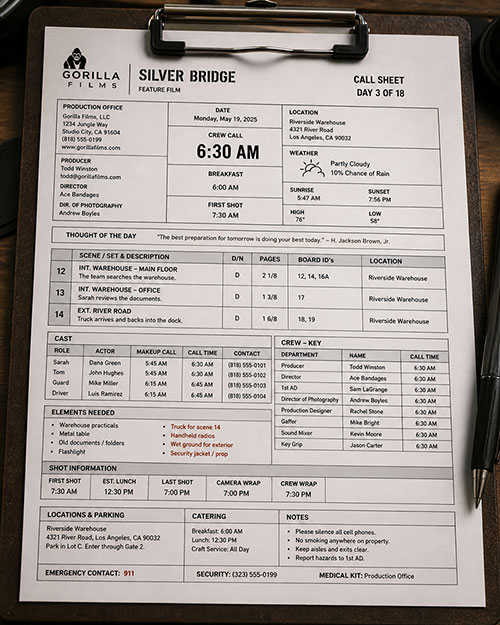
A standard call sheet contains a wide range of information, all designed to support the day’s shoot.
At a high level, it includes:
- production title and key contacts
- shoot date and general call time
- location details and directions
- weather forecast and sunrise/sunset times
- cast list and individual call times
- crew call times and department notes
- scene numbers and descriptions
- special instructions (stunts, effects, equipment needs)
Each section serves a purpose, and together they create a complete picture of the day’s work.
How a Call Sheet Is Built (Real Workflow)
A call sheet is not created in isolation — it’s the result of earlier planning decisions.
First, the script is broken down into elements. Then, a stripboard is used to organize scenes into a shooting schedule. From that schedule, the production team determines what will be shot on a specific day.
The call sheet is built directly from that schedule.
This is why accuracy at the scheduling stage is so important. Any inefficiencies or mistakes in the stripboard will carry through into the call sheet.
In many professional workflows, call sheets are generated directly from the schedule using dedicated tools. This reduces manual work, minimizes errors, and ensures consistency across the production.
Call Sheets vs Shooting Schedules
A common point of confusion is the difference between a shooting schedule and a call sheet.
A shooting schedule outlines the entire production timeline — spanning multiple days or weeks — and organizes all scenes into a structured plan.
A call sheet, on the other hand, focuses on a single day.
Think of it like this:
- The shooting schedule is the big picture
- The call sheet is the daily execution
Both are essential, but they serve different roles.
How Assistant Directors Use Call Sheets
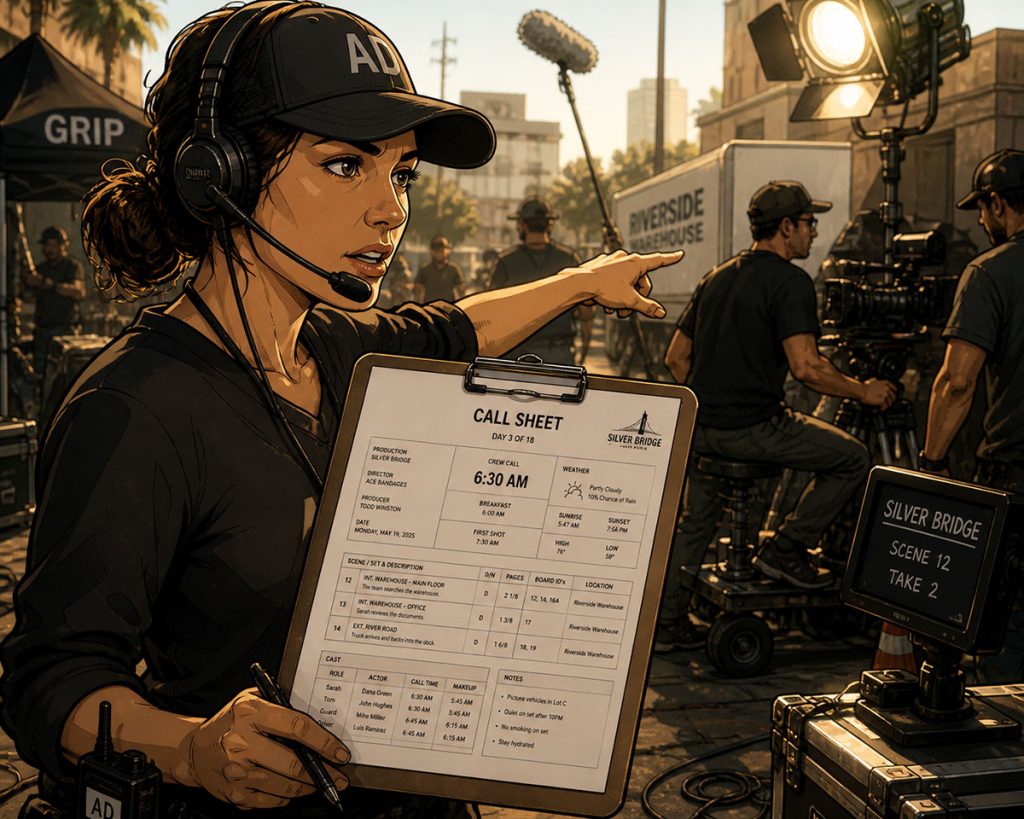
On most productions, the assistant director (AD) is responsible for creating and distributing the call sheet — but their role goes far beyond simply filling out a document.
An experienced AD uses the call sheet to anticipate problems before they happen.
They consider:
- how complex each scene is
- how long setups will take
- whether departments need additional prep time
- how to keep the day running smoothly
The call sheet becomes a reflection of the AD’s foresight. A well-crafted one doesn’t just communicate the plan — it protects it.
Common Mistakes When Creating Call Sheets
Even though call sheets are straightforward in concept, they are often underdeveloped or misused.
One of the most common issues is incomplete or unclear information. Missing call times, vague directions, or unclear instructions can create confusion before the day even begins.
Another problem is failing to align the call sheet with the actual schedule. If the schedule changes but the call sheet is not updated, the entire crew may be working from outdated information — which can quickly derail a shoot.
Overcomplicating the document is another trap. While it’s important to include all necessary details, too much clutter makes it difficult to scan quickly — and speed is essential on set.
Finally, formatting matters more than most people realize. A call sheet should be clean, structured, and easy to read at a glance.
How Call Sheets Connect to Budget and Scheduling
Call sheets don’t just organize the day — they directly impact both schedule and budget.
An inefficient call sheet can lead to:
- delays in production
- unnecessary downtime
- increased overtime costs
For example, poorly planned call times can result in crew waiting around, or departments being unprepared when needed.
On the other hand, a well-structured call sheet ensures that time is used efficiently — helping keep the production on schedule and within budget.
This is why many productions aim to connect scheduling, budgeting, and call sheet creation into a single workflow.
🎯 Download Free Call Sheet Template (Excel)
Ready to build your own?
👉 https://junglesoftware.com/downloads/free_stuff/Call_Sheet_Template_Excel.xlsx
Final Thoughts
A call sheet is one of the most important documents in film production. It transforms your planning work into clear, actionable instructions that keep the entire production aligned.
When done well, it reduces confusion, improves efficiency, and helps ensure that every shoot day runs as smoothly as possible.
Whether you’re working on a small independent film or a large-scale production, mastering call sheets is a critical skill — and one that will immediately improve how your projects run.
Continue Learning Film Production Planning
If you’re diving deeper into production planning, understanding how stripboards connect to scheduling and budgeting is essential.
You may also find these guides helpful:
- How to Schedule a Film Shoot
- Film Budget Template (Free Guide)
- What is a Stripboard and How to Create one
Together, these form the foundation of an efficient, well-organized production.
Questions or Comments?
Have a question about stripboards or film scheduling? Feel free to leave a comment below — or reach out if you want to learn more about how professional tools can streamline your workflow.