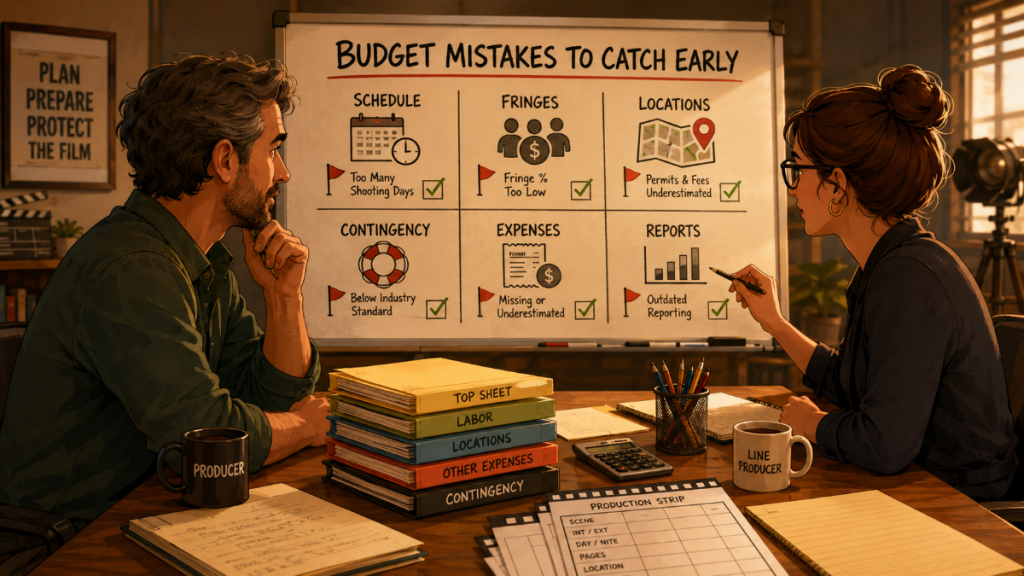
A film budget is not just a spreadsheet full of numbers. It is the financial version of the production plan. Every scene, location, actor, company move, rental, overtime risk, and creative decision eventually shows up somewhere in the budget. That is why film budgeting mistakes can be so expensive. A small oversight in prep can […]
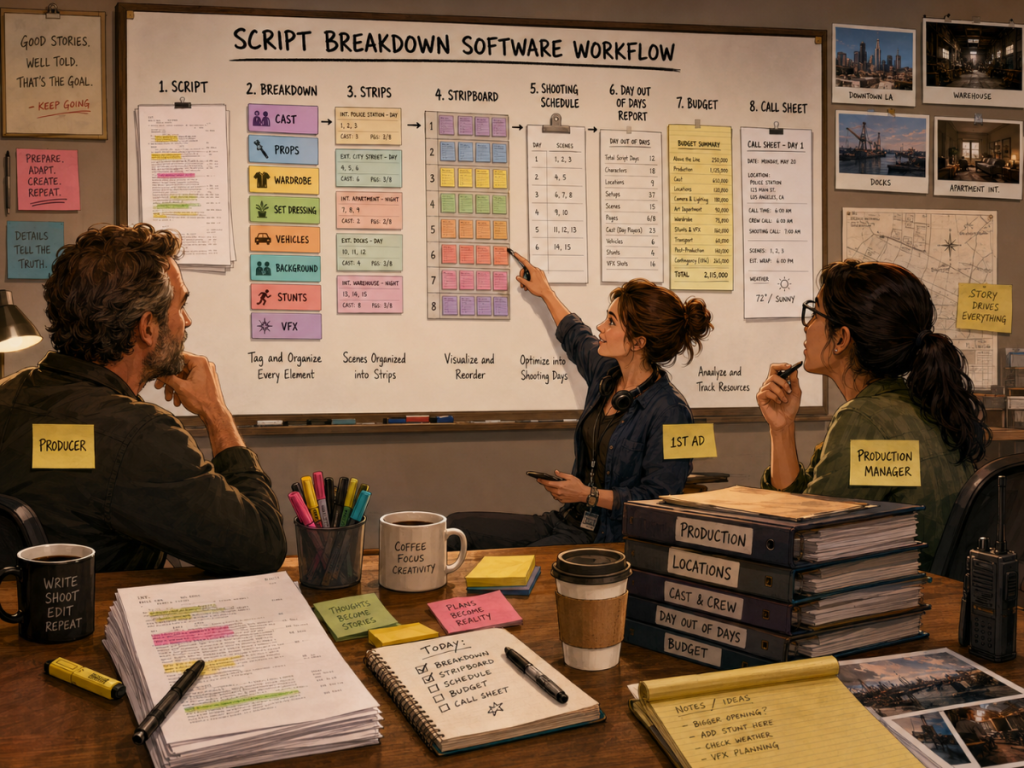
A script breakdown is where a screenplay starts becoming a production plan. Before scenes can be scheduled, budgeted, grouped by location, assigned to shoot days, or turned into call sheets, someone has to identify what each scene actually requires. That means cast, props, wardrobe, vehicles, set dressing, background actors, stunts, animals, special effects, visual effects, […]

A film schedule is not born fully formed. It is built. It starts with a screenplay, then moves through script import, breakdown, tagging, cast records, location planning, shoot days, off days, production strips, stripboards, Day Out of Days reports, one-liners, scheduling reports, budget checks, and finally call sheets. That may sound like a lot. It […]
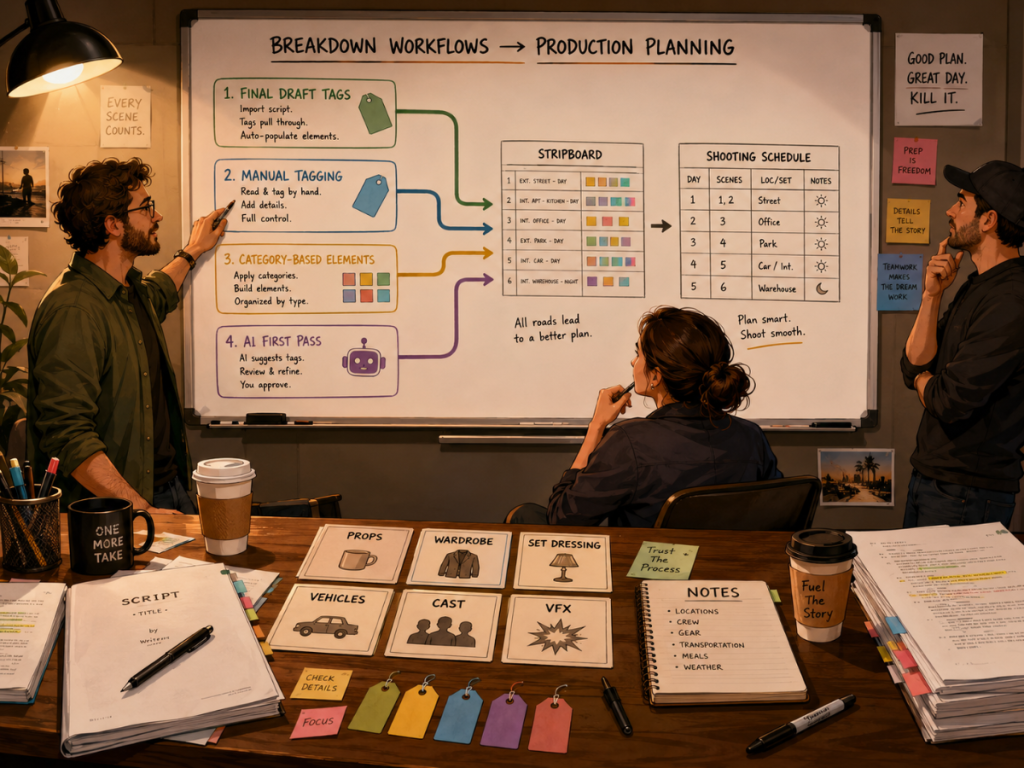
Breaking down a screenplay is one of the first moments when a film becomes a production. Before the stripboard, before the shooting schedule, before the Day Out of Days report, before the budget can truly reflect the plan, someone has to look at the script and ask: What does this scene actually require? That means […]
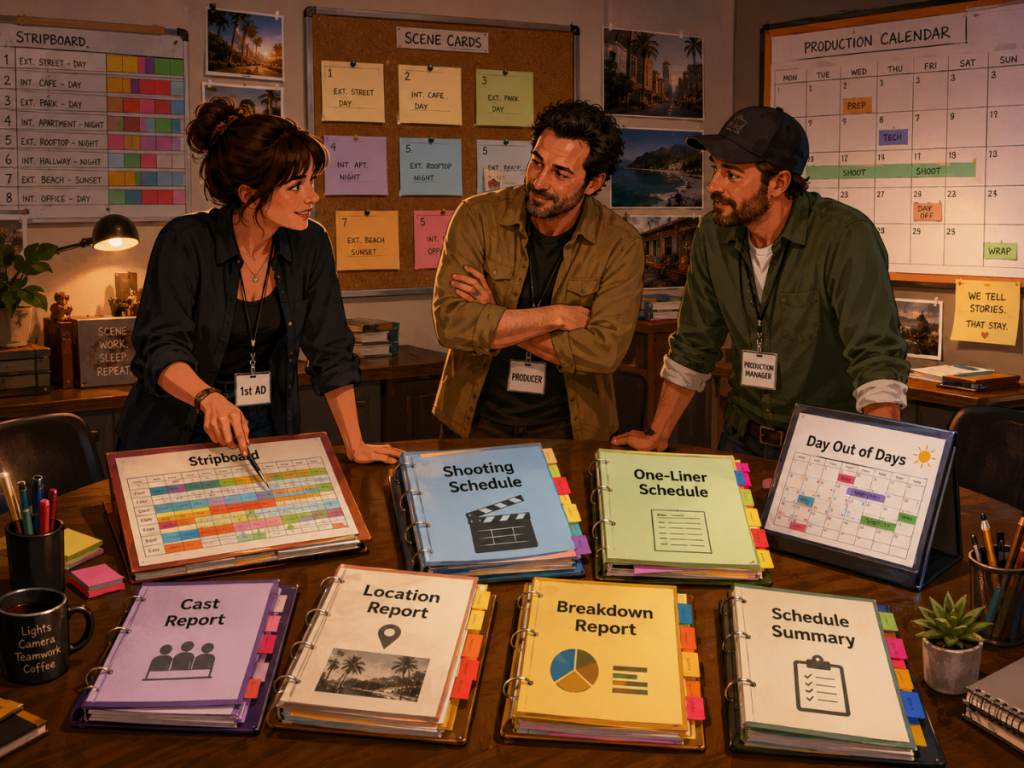
A film schedule is not just one document. It is a living production system. The stripboard shows how scenes are arranged. The shooting schedule shows what will be filmed and when. The one-liner gives the team a quick overview. The Day Out of Days report tracks actor and element work patterns. Cast reports, location reports, […]
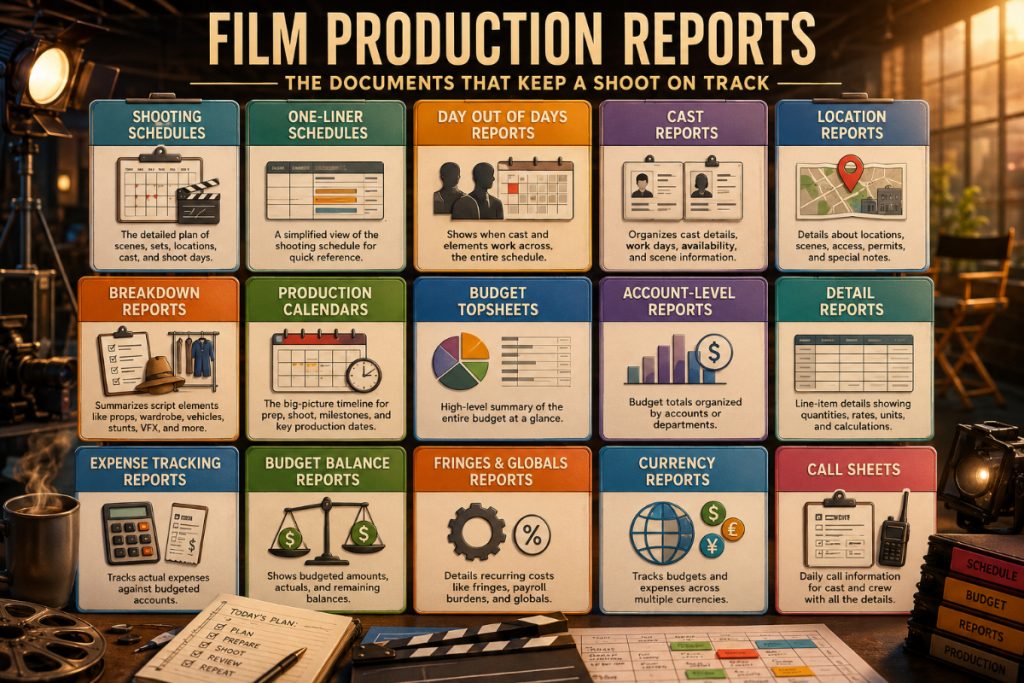
A film set runs on decisions. What scenes are shooting today?Who is needed?Which location is next?How many pages are scheduled?Which actors are working?What did the production finish yesterday?Is the budget still on track? Those answers do not live in one person’s head. At least, they should not. They live in production reports. Film production reports […]
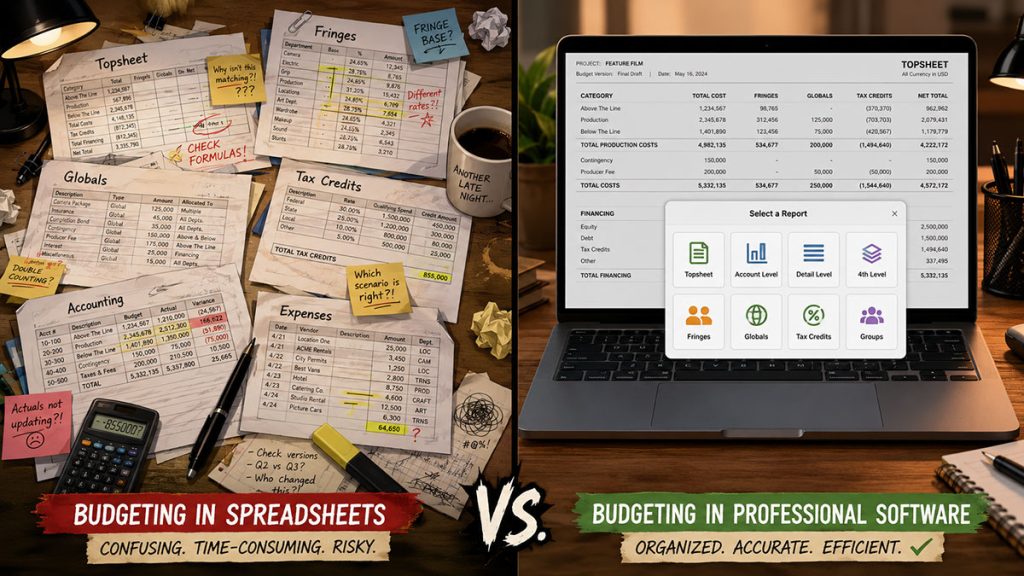
Every film budget starts as a question: Can we afford to make this? For a tiny project, the answer might live comfortably in a spreadsheet. A student film, short film, proof-of-concept, branded piece, or early estimate can often survive with a film budget template, a few formulas, and a producer who knows where everything is […]
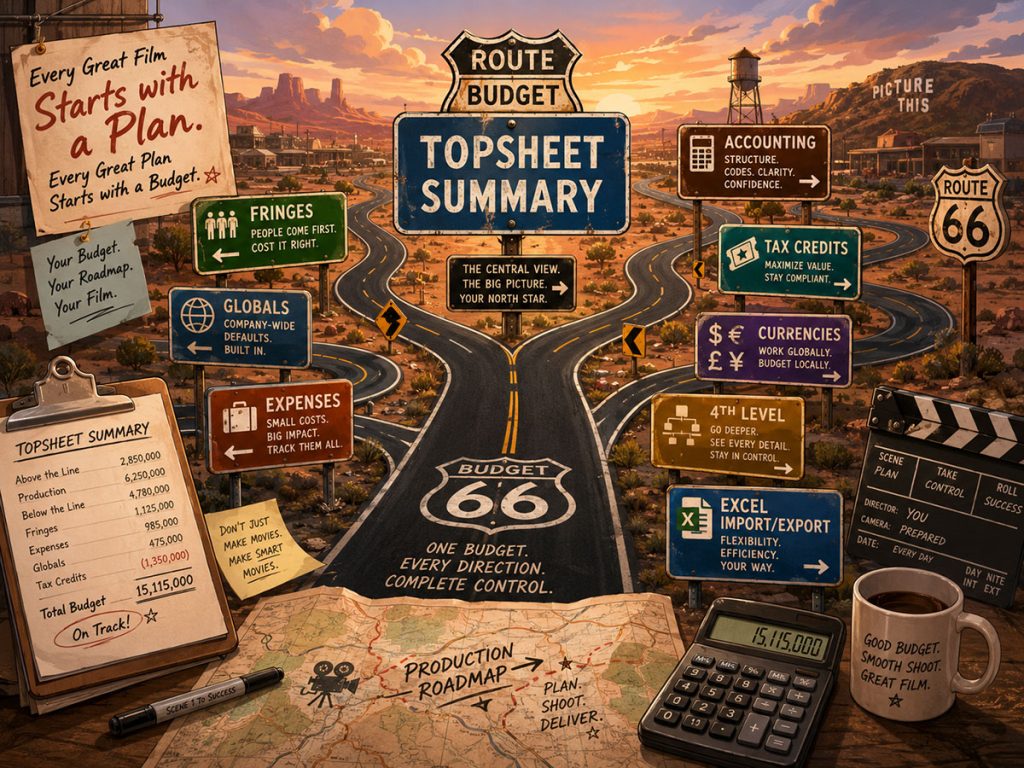
A film budget is not just a spreadsheet with numbers in neat little boxes. It is a production roadmap. It tells you what the movie can afford, where the money is going, which departments need support, what the schedule is likely to cost, how payroll and fringes affect the bottom line, and whether the project […]
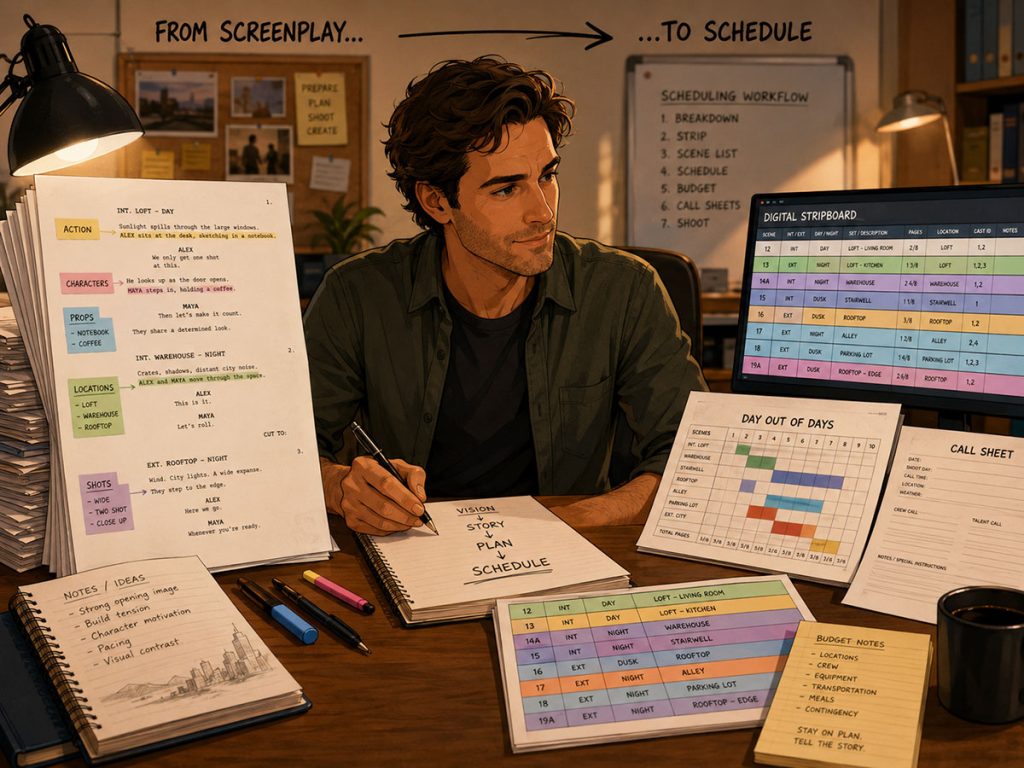
A screenplay is written to be read. A shooting schedule is built so the movie can actually be made. Between those two documents is one of the most important transitions in pre-production: turning script pages into shoot days, cast requirements, locations, production strips, breakdown elements, Day Out of Days reports, call sheets, and budget decisions. […]