
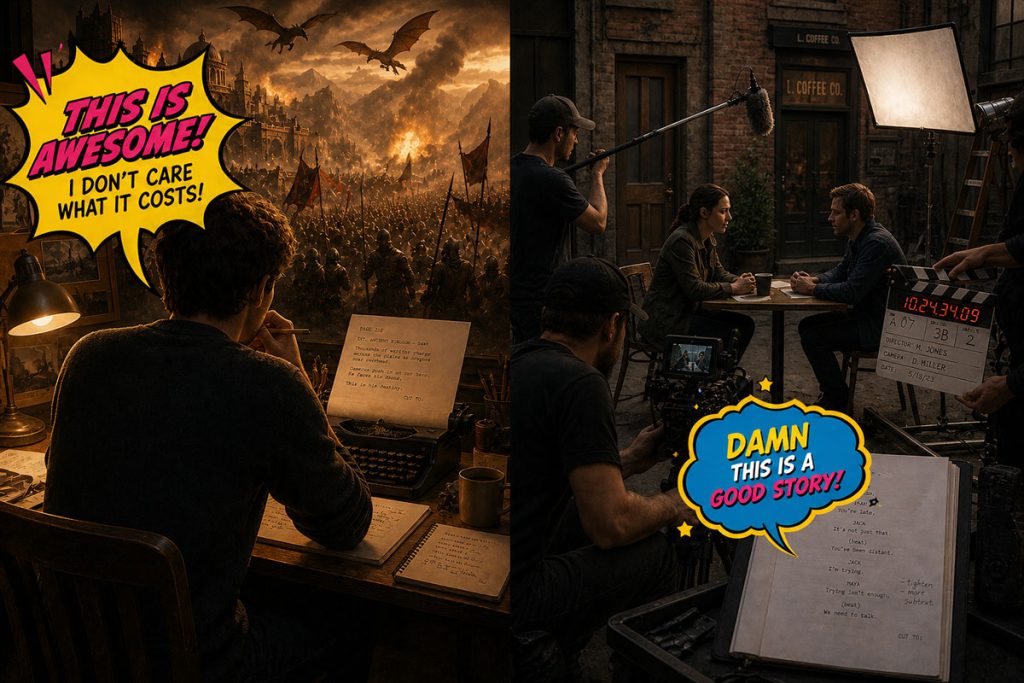
Every screenwriter wants the same thing. To see their script become a film.
The story works. The characters feel real. The dialogue lands. On the page, everything feels cinematic. And yet… most screenplays never make it into production.
Not because they are bad.
But because they are not filmable.
A screenplay can be compelling, emotional, and even brilliant—while still being incredibly difficult to produce. Too many locations. Too many characters. Too many logistical demands hidden inside otherwise simple scenes.
From a production standpoint, those scripts carry risk. And risk slows things down. A filmable screenplay is different. It still tells a great story, but it understands something deeper:
It knows how films actually get made.
What Is a Filmable Screenplay?
A filmable screenplay is a script that balances creative vision with production reality.
It does not limit imagination. Instead, it channels it in a way that can be executed efficiently on set.
That means:
- Locations are manageable
- Scenes are grouped logically
- Characters are used efficiently
- Action is intentional, not excessive
More importantly, the script anticipates how it will translate into a schedule and a budget.
Because every line written on the page eventually turns into something that must be built, sourced, scheduled, and paid for.
A filmable screenplay does not just tell a story. It quietly prepares for production.
Why Most Screenplays Never Get Produced
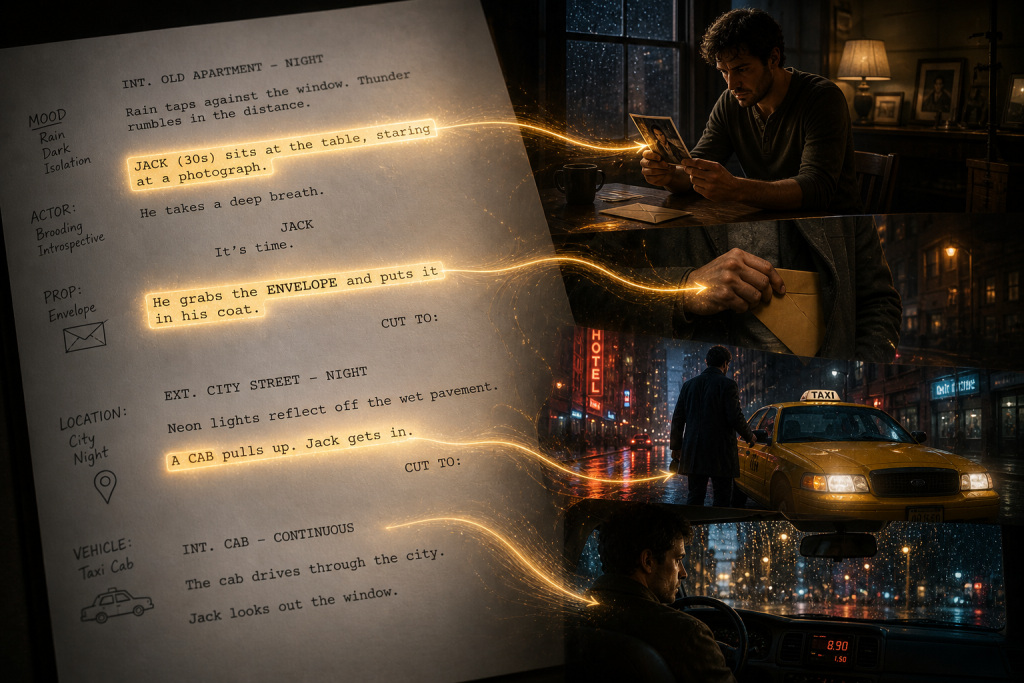
The issue is rarely obvious at first glance. A script may read beautifully and still fall apart under production pressure.
What causes that gap? Often, it comes down to hidden complexity.
A single page might include:
- A new location
- Multiple speaking roles
- Props and wardrobe changes
- Time-of-day shifts
Individually, these feel small.
Collectively, they multiply production demands. That complexity then affects:
- Scheduling
- Budgeting
- Crew requirements
- Equipment needs
At a certain point, the script stops being efficient to produce. Producers recognize this quickly. And when they do, the project becomes harder to move forward.
Writing with Production in Mind
Understanding production does not mean writing smaller stories. It means writing smarter ones. A filmable screenplay considers how scenes connect—not just narratively, but logistically.
Instead of scattering locations across the script, it finds ways to reuse and revisit them.
Instead of introducing characters for single moments, it looks for opportunities to consolidate roles.
Instead of relying on constant visual scale, it chooses moments where scale actually matters.
These decisions do not reduce impact. They increase focus. And that focus makes the script more attractive to producers, directors, and production teams.
Location Strategy (The Hidden Budget Driver)
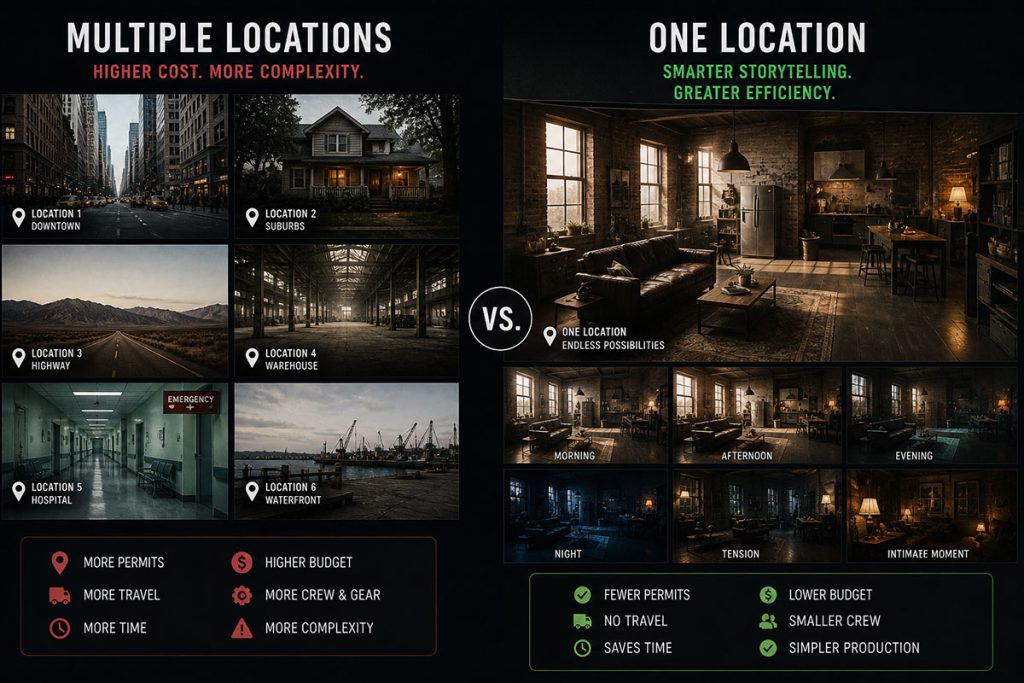
Locations are one of the biggest drivers of production cost. I see this in screenplays ALL THE TIME. If you want to make the screenplay filmable — LIMIT YOUR LOCATIONS! Think Rear Window, Clerks, The Blair Witch Project.
Each new location introduces:
- Permits
- Setup time
- Company moves
- Lighting adjustments
- Equipment transport
From a writing perspective, locations feel limitless.
From a production perspective, each one carries weight.
A filmable screenplay treats locations as assets, not just settings.
It finds ways to return to the same environment. It builds multiple scenes within the same space. It uses variation—time of day, blocking, character dynamics—to keep those locations feeling fresh.
The result is a script that feels expansive… without becoming expensive.
Character Efficiency
Every character adds complexity.
Not just in casting, but in scheduling, wardrobe, coordination, and screen time balance. A script filled with one-scene characters creates friction. A filmable screenplay looks for ways to streamline.
That does not mean reducing the world. It means strengthening it.
Combining roles, extending character presence, and giving fewer characters more meaningful impact often results in a stronger story and a more producible script.
Scene Design and Practical Execution
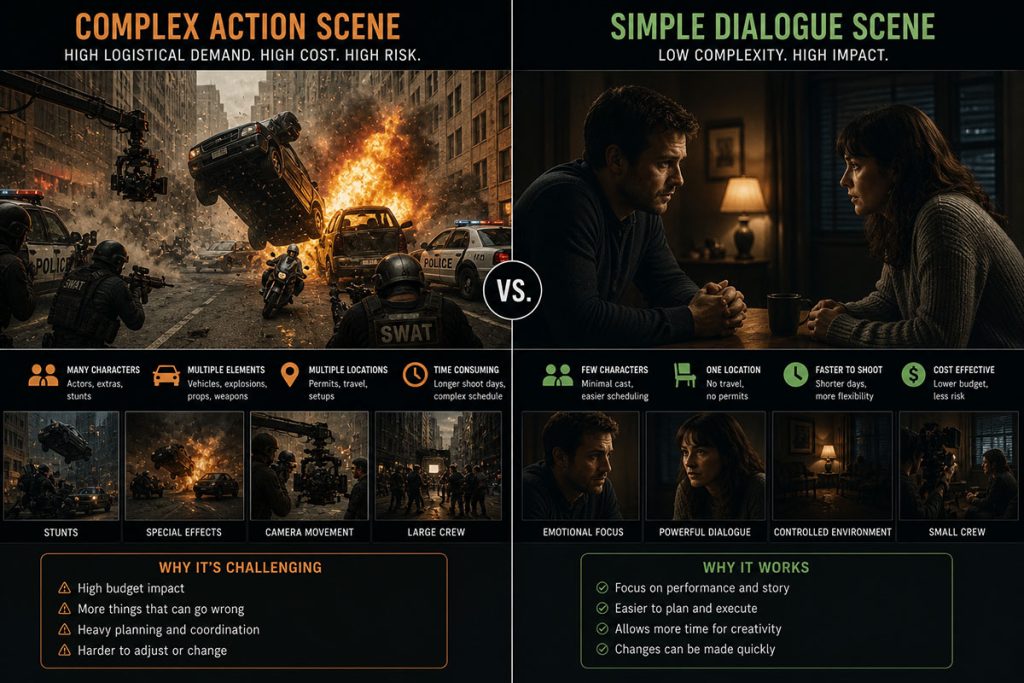
Some scenes look simple but are not. Others look simple and stay simple. The difference lies in execution.
A scene involving stunts, vehicles, weather effects, or large crowds requires coordination across multiple departments. Each layer adds time and cost.
That does not mean avoiding those scenes entirely. It means using them intentionally. A filmable screenplay treats complexity like a resource. It spends it where it matters most.
Moments of scale feel bigger when they are not constant. Moments of intimacy feel stronger when they are given space. Balance becomes the key.
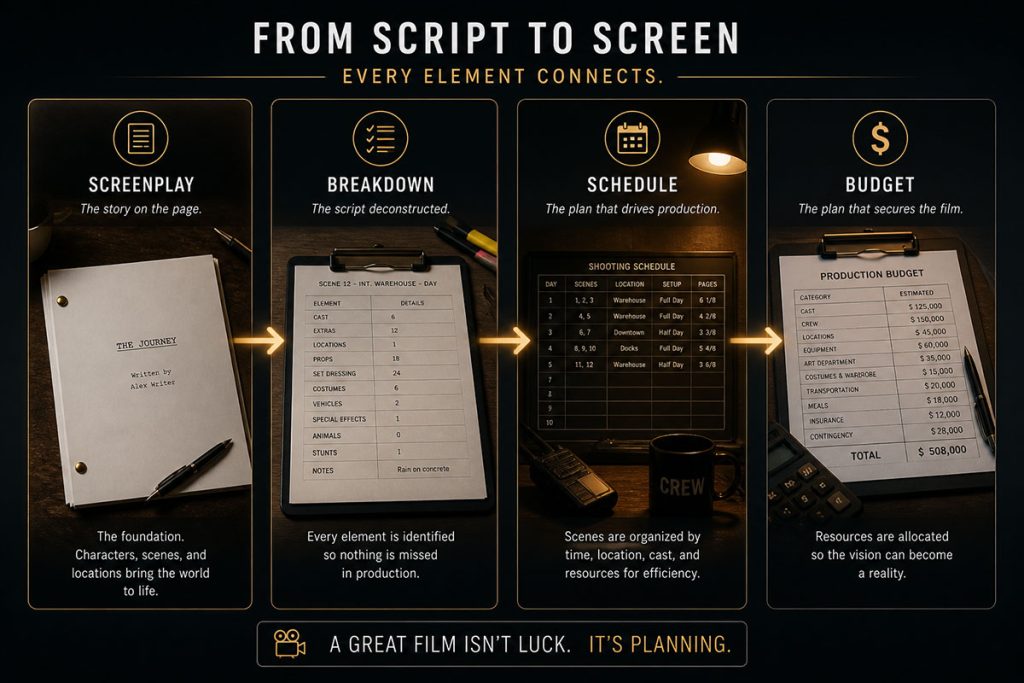
How Script Breakdown Reveals Everything
👉 How to Break Down a Script for Film Production
A script breakdown exposes the reality behind the writing.
Every element becomes visible. Every requirement gets counted. Every hidden cost surfaces.
Writers who understand this process gain a major advantage. They can see the production implications of their choices before the script reaches a producer. That awareness alone can transform how a script is received.
Writing for the Schedule and Budget
A filmable screenplay does not ignore scheduling. It works with it.
Scenes that share locations can be grouped together. Characters can be scheduled efficiently. Time-of-day shifts can be minimized.
All of these decisions reduce friction during production. They also increase the likelihood that the project moves forward. Because when a script aligns with a realistic schedule and budget, it becomes easier to say yes.
Why Filmable Scripts Get Made Faster
Producers are constantly evaluating risk.
A script that feels unpredictable from a production standpoint requires more resources, more planning, and more contingency.
A filmable screenplay reduces that uncertainty. It shows that the writer understands not just storytelling, but execution. That combination builds confidence. And confidence accelerates decisions.
Conclusion
A great screenplay tells a story.
A filmable screenplay makes that story possible.
It understands that every creative choice has a practical side. It respects the realities of production without losing its voice.
And most importantly, it increases the chances that the script moves beyond the page.
Because in filmmaking, the goal is not just to write something compelling.
It is to write something that can actually be made.
Continue Learning Film Production Planning
If you’re diving deeper into production planning, understanding how stripboards connect to scheduling and budgeting is essential.
You may also find these guides helpful:
- How to Schedule a Film Shoot
- Film Budget Template (Free Guide)
- What is a Stripboard and How to Create one
- What Is a Crew Deal Memo (And Why It Can Save Your Production)
Together, these form the foundation of an efficient, well-organized production.
Questions or Comments?
Have a question about stripboards or film scheduling? Feel free to leave a comment below — or reach out if you want to learn more about how professional tools can streamline your workflow.