
How to Build Your Budget – a Free Guide
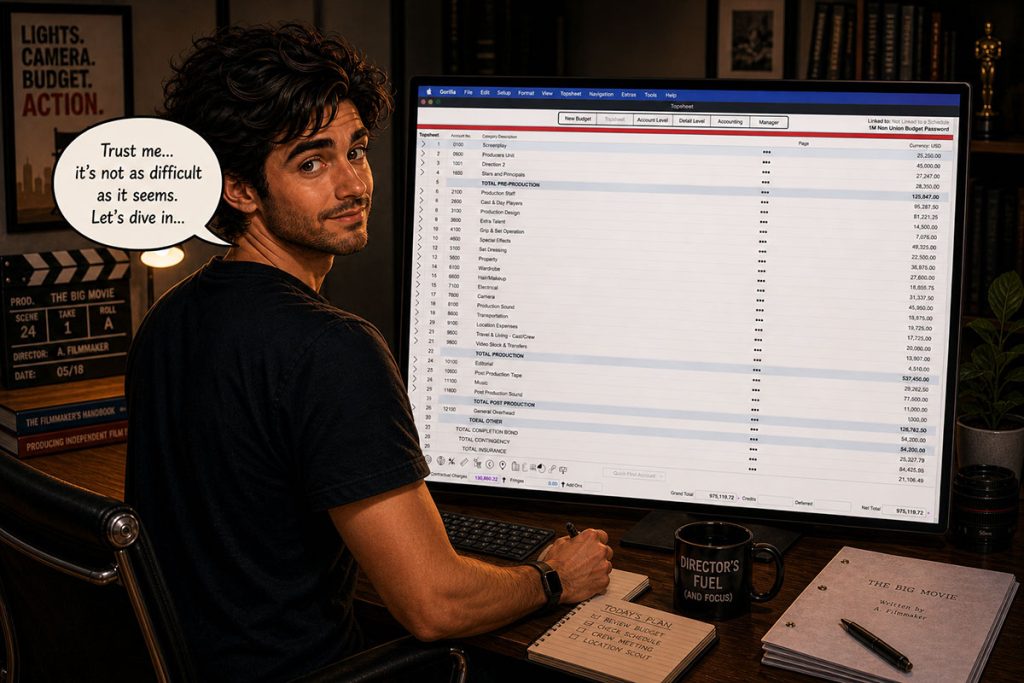
Creating a film budget can feel intimidating, especially if you’re working on your first project. But a well-structured budget is essential for keeping your production on track.
In this guide, we’ll show you how to build a film budget step by step — and how to use a film budget template effectively.
What Is a Film Budget Template?
A film budget template is a structured document that helps you estimate and organize all production costs.
It typically includes:
- Pre-production expenses
- Production costs
- Post-production costs
- Contingency funds
A good template ensures nothing is overlooked.
Key Categories in a Film Budget
A professional film budget is divided into major categories:
Above-the-Line
- Director
- Producer
- Cast
Below-the-Line
- Crew
- Equipment
- Locations
- Production design
Post-Production
- Editing
- Sound
- Visual effects
Miscellaneous
- Insurance
- Permits
- Contingency
There can be many more sub-categories (called Accounts) depending on the complexity of the budget. Most film budget templates come with more accounts than you will need for your budget — and more often than not — you will not even use all the accounts in the template.
Step 1 — Break Down Your Script
Just like scheduling, budgeting starts with the script. Scheduling is a whole other ball game, folks… and many times the person who creates the schedule is not the same person who creates the budget. Nevertheless, to learn more about scheduling see our post: How to Schedule a Film Shoot (Step-by-Step Guide).
Identify:
- Locations
- Cast size
- Props and wardrobe
- Special effects
Each element translates into a cost.
Should You Create a Budget or Schedule First?

One of the most common questions in pre-production is whether you should build your budget first or your schedule first.
Some filmmakers say it doesn’t matter. Others argue that it depends on how much money you already have. But in most professional workflows, the reality is clear:
Your schedule should come first.
Why? Because your schedule defines the scope of your production. It determines how many shooting days you need, how many locations you’ll use, and how long your cast and crew will be working. All of those factors directly drive your costs.
Why the Schedule Comes First
A production schedule answers critical questions that a budget alone cannot:
- How many days are you shooting?
- How many locations are required?
- How complex are the scenes?
- How many company moves will you need?
Without these answers, any budget you create is essentially a rough guess.
When you build a schedule first, you’re creating a realistic blueprint. The budget then becomes a reflection of that plan, rather than an estimate built on assumptions.
The Difference Between Studio and Independent Productions
The relationship between scheduling and budgeting can vary depending on the scale of the production.
On large studio films, the process typically starts with the schedule. The production team determines what is required to execute the script, and then builds a budget around that plan. If the schedule calls for 60 shoot days across multiple locations, the budget expands to support it.
On independent films, the process is often reversed out of necessity.
For example, a smaller production might have a fixed budget of $1 million. In that case, filmmakers may need to adjust the schedule to fit within financial constraints — reducing shooting days, limiting locations, or simplifying scenes.
However, even in these cases, the schedule still plays a critical role. Filmmakers often create a preliminary schedule first, then refine it to match the available budget. The two become a balancing act, but the schedule remains the foundation that informs financial decisions.
Why Scheduling and Budgeting Work Best Together
Ultimately, scheduling and budgeting are not separate processes — they are two sides of the same system.
Changes in your schedule will affect your budget, and changes in your budget will affect your schedule. This is why many filmmakers rely on tools that combine film scheduling and budgeting software in one workflow, allowing them to make adjustments in real time and maintain control over both.
Step 2 — Estimate Costs
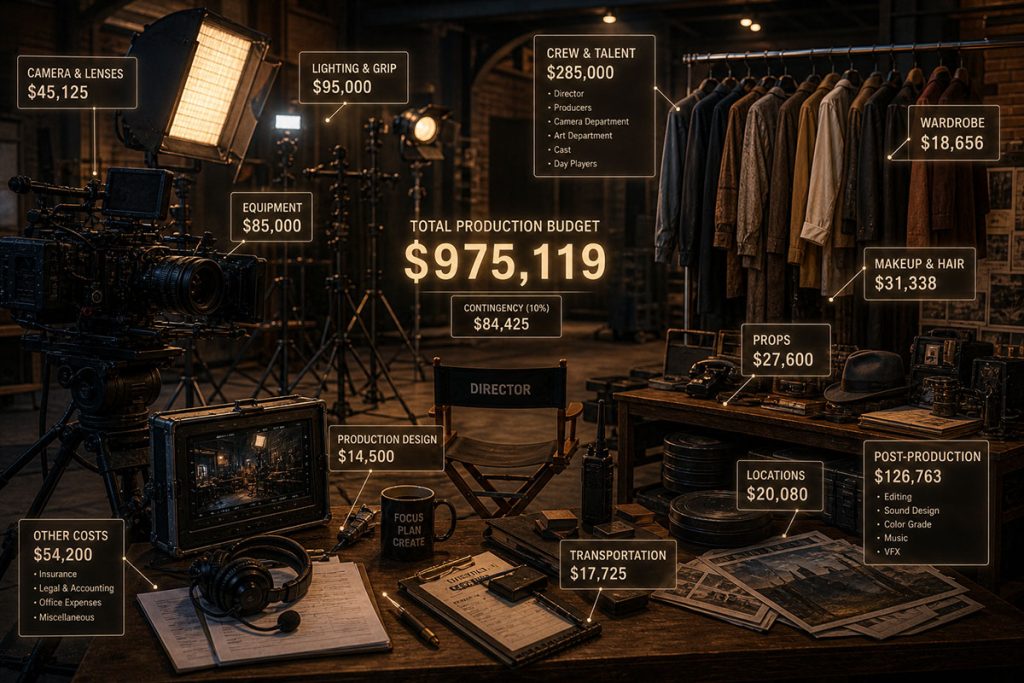
Estimating costs accurately is one of the most important parts of building a film budget. Every decision you make in pre-production will ultimately affect how much your project costs to execute.
Start by researching real-world rates for each category. For example, on an indie production, crew rates can range from $300 to $800 per day depending on experience and role. Equipment rentals vary widely as well, with camera packages, lighting, and sound gear often making up a significant portion of the budget. Location fees, permits, and insurance should also be factored in early.
It’s important to avoid the common mistake of underestimating costs just to “make the numbers work.” A realistic budget gives you control. An unrealistic one creates problems during production.
Step 3 — Use a Film Budget Template
A film budget template provides a structured way to organize and track every expense in your production. Instead of guessing where money is going, a template allows you to see the full financial picture at a glance.
At a basic level, a template helps you:
- Track costs by category
- Calculate totals automatically
- Identify where adjustments need to be made
For smaller projects, spreadsheets can work as a starting point. However, as productions grow in complexity, many filmmakers transition to dedicated film budgeting software to manage changes more efficiently and avoid manual errors.
Using a structured template from the beginning ensures that nothing is overlooked — from major costs like crew and equipment to smaller but critical expenses like meals, transportation, and contingency.
Align Budget with Schedule
Your budget and schedule are directly connected — and understanding this relationship is key to controlling production costs.
Every additional shooting day increases expenses across multiple categories, including crew wages, equipment rentals, location fees, and logistics. For example, extending a shoot by even one day can significantly impact your total budget, especially on larger productions.
This is why professional filmmakers approach scheduling and budgeting as a single system rather than separate tasks. By adjusting your schedule — grouping scenes by location, minimizing company moves, and optimizing shooting days — you can reduce costs without sacrificing quality.
Many productions rely on tools that combine film scheduling and budgeting software in one workflow, allowing changes in the schedule to automatically reflect in the budget. This creates a more efficient and realistic production plan.
Step 5 — Add a Contingency
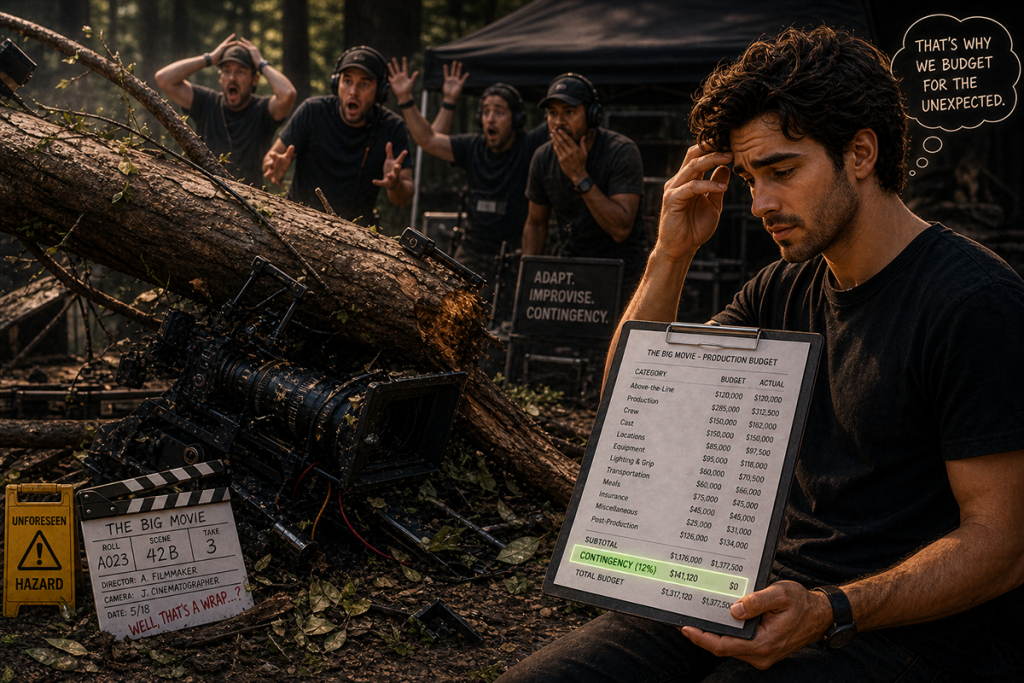
Always include a contingency (typically 10–15%).
Unexpected costs are inevitable, and a contingency protects your production from going over budget.
Why Filmmakers Use Film Budgeting Software
While spreadsheets can work for simple projects, they quickly become difficult to manage as productions grow.
Professional film budgeting software helps filmmakers:
- Organize complex budgets more efficiently
- Update costs in real time
- Reduce manual errors
- Integrate budgeting with scheduling workflows
Tools like Gorilla Budgeting are designed specifically for production environments, allowing filmmakers to build detailed, professional budgets that adapt as the project evolves.
For many productions, moving beyond spreadsheets is what turns a rough plan into a reliable financial blueprint.
Common Film Budgeting Mistakes to Avoid
Even experienced filmmakers can run into budgeting issues if they overlook key details. Here are some of the most common mistakes:
- Underestimating costs — assuming lower rates than what is realistic
- Forgetting contingency — not setting aside 10–15% for unexpected expenses
- Ignoring schedule impact — not realizing how additional shoot days increase costs
- Missing small expenses — travel, meals, and miscellaneous costs add up quickly
- Lack of flexibility — not adjusting the budget as production needs change
Avoiding these mistakes can save your production from costly surprises and help keep everything on track.
Continue Learning Film Production Planning
If you’re diving deeper into production planning, understanding how stripboards connect to scheduling and budgeting is essential.
You may also find these guides helpful:
- How to Schedule a Film Shoot
- How to Estimate Shooting Days from a Screenplay
- What is a Stripboard and How to Create one
- How to Write a Filmable Screenplay
- What Is a Call Sheet in Film? (Free Download)
- Film Budget Categories Explained
- How a Shooting Schedule Impacts Your Film Budget
Together, these form the foundation of an efficient, well-organized production.
Final Thoughts
A strong film budget isn’t just about numbers — it’s about control.
With the right approach (and the right tools), you can plan your production with confidence and avoid costly surprises.
Questions or Comments?
Have a question about stripboards or film scheduling? Feel free to leave a comment below — or reach out if you want to learn more about how professional tools can streamline your workflow.