
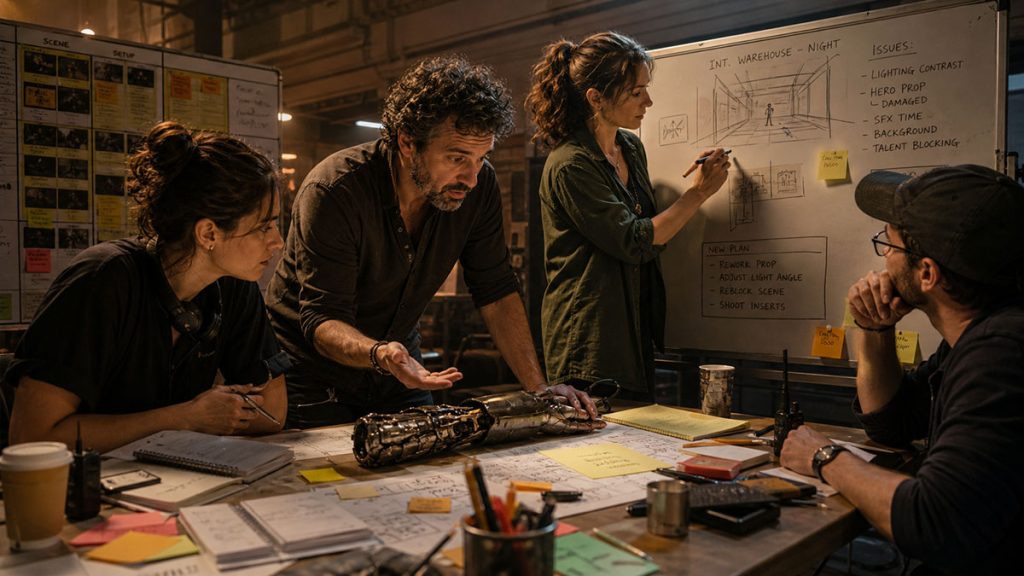
Every filmmaker starts a project with a version of the movie that exists in their head.
The shark works perfectly. Check!
The actors are available. Of course they are!
The masks are cleared. By God, they are just masks!
The horses are saddled. We do have horses, don’t we?
The weather behaves. Please tell me it’s not going to rain tomorrow…
The budget smiles politely and says, “Of course.”
Then production begins.
Suddenly, the shark sinks. The actor is unavailable. The rights holder says no. The horse budget vanishes into the mist. And now the director, producer, assistant director, production designer, writer, and crew all have to answer the same terrifying question:
How do we make this work?
That question has saved more movies than people realize.
Some of the most memorable moments in film and television were not born from unlimited resources. They came from limitation. Mechanical failure. Budget pressure. Legal restrictions. Scheduling conflicts. The kind of production headaches that make everyone stare at the call sheet like it personally betrayed them.
But here’s the strange magic of filmmaking: sometimes the workaround becomes the thing everyone remembers.
Limitations force filmmakers to simplify, focus, invent, and trust the audience’s imagination. In the right hands, a problem does not weaken the movie. It sharpens it.
Why Limitations Can Improve a Film
Filmmaking is a constant negotiation between imagination and reality.
The screenplay may call for a massive crowd scene, a complicated stunt, a rare location, a trained animal, a famous actor, or a visual effect that the budget cannot support. During pre-production, those dreams are tested against schedule, money, locations, cast availability, permits, weather, safety, equipment, and time.
That is not a creative failure. That is the job.
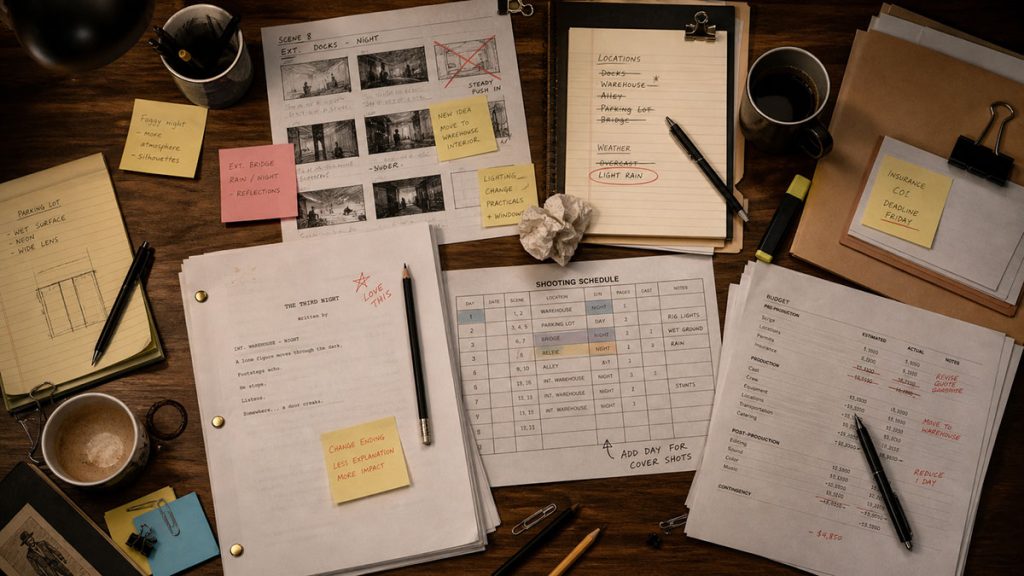
A film becomes real when the team figures out how to translate the script into something that can actually be shot. This is why script breakdowns, stripboards, shooting schedules, call sheets, and budgets matter so much. They are not just paperwork. They are where the movie begins negotiating with the world.
A limitation can make a film better when it forces the filmmakers to ask stronger questions:
What is the scene really about?
Do we need to show the thing, or can we suggest it?
Can sound do what the image cannot?
Can a joke become funnier because we cannot afford the obvious version?
Can a casting change create a new dynamic?
Can a production problem reveal a better storytelling choice?
The answer, surprisingly often, is yes.
1. Jaws and the Shark That Wouldn’t Work
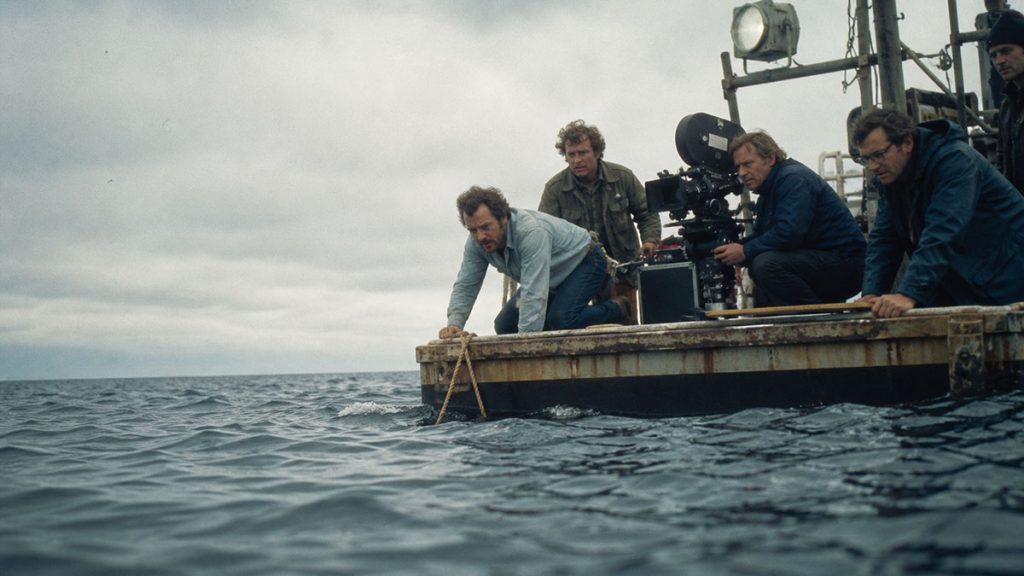
Few production problems are more famous than the mechanical shark in Jaws.
Steven Spielberg’s 1975 thriller was built around a great white shark terrorizing a beach town, but the mechanical shark, nicknamed “Bruce,” was notoriously difficult to operate in ocean water. The production faced repeated technical problems, especially because the animatronic shark had to function in real seawater rather than a controlled tank environment. The result was that Spielberg could not show the shark as often as originally intended.
That could have ruined the movie.
Instead, it made the movie scarier.

Rather than relying on constant shots of the shark, Spielberg leaned into suggestion. The camera became the predator. The audience saw swimmers from below. The waterline became dangerous. Yellow barrels, sudden movement, empty ocean, and John Williams’ unforgettable two-note theme created a presence more terrifying than a visible rubber monster ever could. The shark was on screen only briefly compared to the power it had over the entire film.
The limitation forced the filmmakers into one of cinema’s greatest horror principles:
The audience’s imagination is often more frightening than the image itself.
A perfectly working shark might have turned Jaws into a more literal creature feature. The broken shark pushed the film toward suspense. It made the ocean itself feel haunted. Every ripple became suspicious. Every quiet stretch of water became a threat.
From a production standpoint, this is a classic example of making the screenplay filmable under pressure. The story still needed a shark. The production just found a more cinematic way to express it.
The shark did not have to be seen to be felt.
That is not just a workaround. That is direction.
2. Baby Driver and the Mask Rights That Created a Better Joke
Edgar Wright’s Baby Driver is a movie built on rhythm, timing, and stylish precision. Released in 2017, the film includes a robbery gag involving masks, and the story behind those masks is a perfect example of a limitation creating a better comedic beat.
Wright originally wanted the robbers to wear Michael Myers masks from Halloween. However, according to reports and Wright’s own comments, the production could not use the Halloween Michael Myers mask because of rights issues connected to the upcoming Halloween reboot. Instead, Wright changed the scene so the characters wore masks of comedian Mike Myers, turning the rights problem into a wordplay-driven visual gag.
That change is funnier because it feels both absurd and character-based.
The joke works because it is not just random. It plays on the confusion between Michael Myers, the horror character, and Mike Myers, the actor and comedian. The robbers intended one thing, but the mistake creates a ridiculous visual result. It is the kind of gag that feels effortless on screen, even though it came from a real production obstacle.
This is a great lesson for filmmakers: rights limitations are not always dead ends. Sometimes they push the story toward something more original.
Had the production used the expected Halloween masks, the scene would have been visually recognizable. But the Mike Myers version gives the moment its own identity. It becomes stranger, more specific, and more memorable.
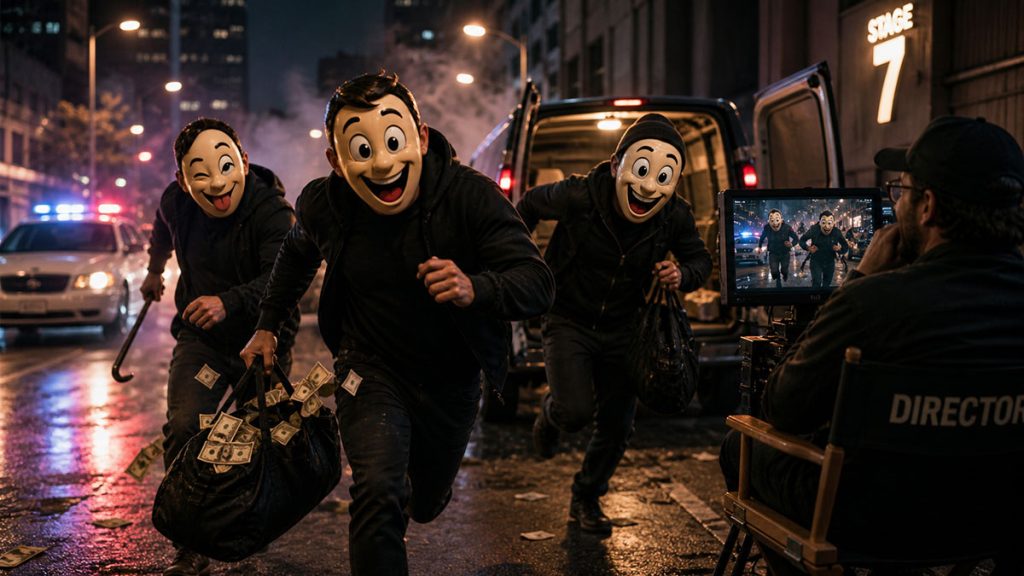
In production, rights issues can feel like pure frustration. A song cannot be cleared. A logo cannot be shown. A character reference has to be changed. A location cannot include certain artwork. These problems can seem small, but they often force creative teams to replace borrowed recognition with invented personality.
That is usually better filmmaking.
3. Friends and the Scheduling Conflict That Created an Emmy-Winning Role
Limitations do not only happen in film. Television lives on them.
Writers and producers may have a story planned, but actors have availability windows, production calendars shift, and episodes still have to be delivered. When a performer cannot return, the show has to adapt quickly.
That is what happened with Friends.
Reese Witherspoon had previously appeared as Jill Green, one of Rachel’s sisters. The producers reportedly wanted Witherspoon to return, but she was unavailable because of a scheduling conflict. Instead, the show introduced Rachel’s other sister, Amy Green, played by Christina Applegate. Applegate’s performance became a standout, and she won a Primetime Emmy Award for Outstanding Guest Actress in a Comedy Series for the role.
This is a different kind of limitation than a broken shark or a missing prop. It is a scheduling limitation.
But the principle is the same.
The original plan changed, and the replacement created something fresh. Amy Green brought a different kind of comic chaos than Jill. She was blunt, oblivious, self-centered, and hilariously inappropriate. The role gave the show a new sibling dynamic rather than simply repeating the earlier one.
For writers and producers, this is a reminder that casting changes do not always weaken a story. Sometimes they expand it.
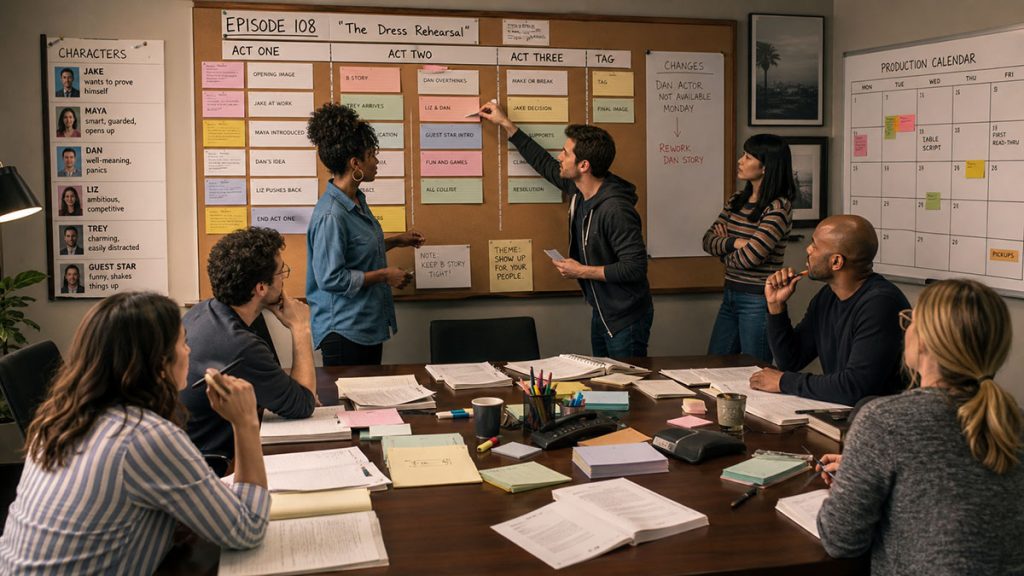
A scheduling conflict can force the writers to ask:
What if this is not the same character?
What if the family dynamic is bigger?
What new conflict does this person bring?
How can the substitute become a feature, not a patch?
In production, this happens constantly. An actor is not available for a certain day. A location is only open in the morning. A child actor has limited hours. A guest star can only shoot one scene. These limitations shape the schedule, but they also shape the writing.
When handled creatively, scheduling limitations do not just solve problems. They create new story opportunities.
4. Monty Python and the Holy Grail and the Horses They Couldn’t Afford
Sometimes a budget limitation does not just improve a movie.
Sometimes it becomes the entire comic language of the movie.
In Monty Python and the Holy Grail, King Arthur and his knights famously travel without actual horses. Instead, the characters pretend to ride while servants clap coconut shells together to create the sound of galloping. The gag reportedly came from the production’s inability to afford real horses, turning a budget problem into one of the most iconic jokes in British comedy.
The brilliance of the coconut gag is that it does more than save money.
It tells the audience exactly what kind of movie they are watching.
The film is not trying to create a polished, expensive medieval epic. It is mocking the shape of one. The absence of horses becomes part of the absurdity. The characters behave as if the illusion is perfectly normal, which makes the joke even better.
A less imaginative production might have tried to hide the lack of horses. Monty Python built a running joke around it.
That is the power of embracing the limitation rather than disguising it.

The coconut gag works because it matches the tone of the film. It is cheap, ridiculous, theatrical, and brilliant. The limitation did not fight the movie’s identity. It revealed it.
For low-budget filmmakers, this is a valuable lesson. Not every missing resource has to be hidden. Sometimes the audience will happily come with you if the creative choice feels intentional, funny, stylish, or emotionally honest.
The trick is confidence.
If the movie apologizes for the limitation, the audience notices the lack.
If the movie transforms the limitation into style, the audience remembers the choice.
The Production Lesson: Constraints Reveal Priorities
Every production has limitations. Even large studio films have them.
The difference is not whether problems happen. They always happen. The difference is whether the production has enough clarity to respond well.
A good schedule helps the team understand what can actually be shot. A good budget shows where the pressure points are. A strong script breakdown identifies what each scene really requires. A stripboard helps the assistant director and production team see the movie as a practical sequence of shootable days.
Without that planning, every limitation feels like a crisis.
With planning, limitations become decisions.
This is where creative filmmaking and production management meet. The director may find the artistic solution, but the production team helps reveal the options. Can the scene be moved? Can it be rewritten? Can two locations become one? Can a prop replace a visual effect? Can sound carry the idea? Can the schedule be rearranged to protect the most important scene?
The best productions do not simply spend their way out of problems. They solve them.
That is why budget and scheduling are not just administrative concerns. They are creative tools.
A film budget tells you what kind of movie you can afford to make.
A shooting schedule tells you how that movie can be captured.
A production limitation tells you where the movie needs invention.
How Filmmakers Can Turn Limitations Into Better Choices
Not every limitation automatically makes a film better. Some limitations simply hurt. Losing a location the night before a shoot is not secretly charming. A missing permit is not a muse wearing a headset.
But limitations can become useful when filmmakers respond with intention.
Identify the purpose of the scene
Before replacing a costly element, ask what the scene actually needs to accomplish.
Does it need spectacle? Suspense? Comedy? Emotional intimacy? Plot information? Character conflict?
If the shark cannot be shown, the scene may still work through fear.
If the horses cannot be afforded, the scene may work through absurdity.
If an actor is unavailable, the scene may work through a different relationship.
The surface element can change if the dramatic purpose remains intact.
Use suggestion instead of explanation
Audiences do not need to see everything.
Sound, shadow, reaction shots, off-screen space, production design, and editing can often do more than expensive visuals. This is especially true in suspense, horror, mystery, and comedy.
What the audience imagines can be more powerful than what the production can afford to show.
Let the workaround match the tone
A workaround only works if it belongs in the movie.
The coconut gag works in Monty Python and the Holy Grail because the entire film is absurd. The unseen shark works in Jaws because the movie is built on dread. The Mike Myers mask gag works in Baby Driver because the movie has a playful, stylized sense of humor.
The solution should feel like part of the film’s language, not a desperate patch sewn on in bad lighting.
Build flexibility into pre-production
Creative solutions are easier when the production has room to adjust.
This is why early planning matters. Script breakdowns, schedules, budgets, and call sheets help the team see the moving parts before the shoot becomes chaos with snacks.
When a limitation appears, the production can respond faster if it already knows:
Which scenes are essential
Which elements are expensive
Which actors are limited
Which locations are fragile
Which days are overloaded
Which creative choices can bend without breaking the story
That kind of clarity protects the movie.
The Best Workaround Is Not Always Smaller
One mistake filmmakers make is assuming that a limitation means the new idea must be less ambitious.
That is not always true.
A smaller solution can be more powerful if it is more precise. Showing less of the shark did not make Jaws feel smaller. It made the threat feel larger. Removing real horses from Monty Python and the Holy Grail did not make the comedy weaker. It made the world more ridiculous and distinct.
The workaround should not merely be cheaper.
It should be sharper.
Sometimes that means simplifying the visual approach. Sometimes it means rewriting a scene around a better joke. Sometimes it means changing a character. Sometimes it means turning a production flaw into an intentional style.
Filmmaking is full of these moments. The movie you planned meets the movie you can actually make. Somewhere between the two is the movie that wants to exist.
That is where the good stuff often hides.
What This Means for Screenwriters
This topic matters for screenwriters, too.
A screenplay is not just a literary document. It is a production blueprint. The more a writer understands budget and scheduling realities, the more effectively they can write scenes that producers, directors, and assistant directors can actually execute.
That does not mean every script should be small. It means every script should be aware.
A filmable screenplay gives the production team room to make strong choices. It understands that five locations in three pages may create a scheduling problem. It knows that a crowd scene, rain machine, child actor, animal, car stunt, and night exterior all in the same sequence may turn a simple scene into a budget dragon with paperwork claws.
But a filmable screenplay also knows when a limitation can become a creative advantage.
Instead of writing the impossible version first and hoping production figures it out, smart writers ask:
Can the tension be created through what we do not see?
Can the scene happen in one location instead of three?
Can the expensive action happen off-screen and land through aftermath?
Can a character’s reaction be more powerful than the event itself?
Can the limitation make the scene more original?
The goal is not to drain ambition out of the script.
The goal is to make the ambition shootable.
Where Gorilla Scheduling & Budgeting Fits In
Creative problem-solving becomes much easier when the production has a clear plan.
Gorilla Scheduling and Gorilla Budgeting help filmmakers move from script to production with a practical understanding of what the movie requires. A script breakdown can reveal cast, props, locations, vehicles, extras, special effects, and other production elements. A schedule helps organize those elements into shootable days. A budget shows how creative decisions affect cost.
That visibility matters.
When a limitation appears, the team can make smarter decisions because they are not guessing in the dark. They can see what changes affect the schedule, what choices impact the budget, and where the production has room to adapt.
The best filmmaking tools do not replace creativity. They give creativity a map.
And on a real production, a map can save the movie.
Final Thoughts: The Problem Might Be the Movie’s Best Idea
Limitations are frustrating. No filmmaker wants the shark to break, the actor to be unavailable, the mask rights to fall through, or the horse budget to disappear into medieval fog.
But cinema has a strange way of rewarding clever survival.
A broken shark created suspense.
A rights issue created a better joke.
A scheduling conflict created an Emmy-winning guest role.
A missing horse budget created coconuts.
The lesson is not that filmmakers should seek out problems. Production will provide plenty for free.
The lesson is that limitations are not always the enemy of creativity. Sometimes they are the doorway into a better version of the idea.
A good filmmaker does not simply ask, “What did we lose?”
A good filmmaker asks, “What can this become?”
And sometimes, with the right planning, the right crew, and the right amount of coconut-based courage, the answer is better than the original plan.